When choosing a sofa, appearance often receives more attention than the material hidden beneath the fabric. Yet the filling controls how the cushions feel after years of sitting, napping, and daily movement. High resilience foam is designed to recover its shape quickly after pressure. This quality can help reduce permanent dips and uneven surfaces.
Which sofa filling lasts the longest without deforming? In many practical comparisons, high resilience foam offers a strong answer, especially when its density and compression rating match the sofa’s intended use. It can support the body without feeling completely rigid. After someone stands up, the cushion gradually returns instead of remaining sharply compressed. That small detail matters in busy homes.
Still, foam alone does not guarantee a durable sofa. A weak frame, poor suspension, or thin upholstery can shorten its useful life. Professional furniture testing usually considers foam density, firmness, recovery, seam construction, and repeated-load performance together. A showroom cushion may feel excellent for five minutes. Real life is less generous. Children kneel on it, pets stretch across it, and one corner may receive far more pressure than another.
High resilience foam also requires sensible maintenance. Rotating loose cushions, avoiding prolonged moisture, and following the manufacturer’s care instructions can support more even wear. Evidence from product specifications and independent testing is more reliable than vague claims about “premium” comfort. Even then, expectations should remain realistic. No filling stays flawless forever. The goal is slower deformation, consistent support, and better comfort over many years.
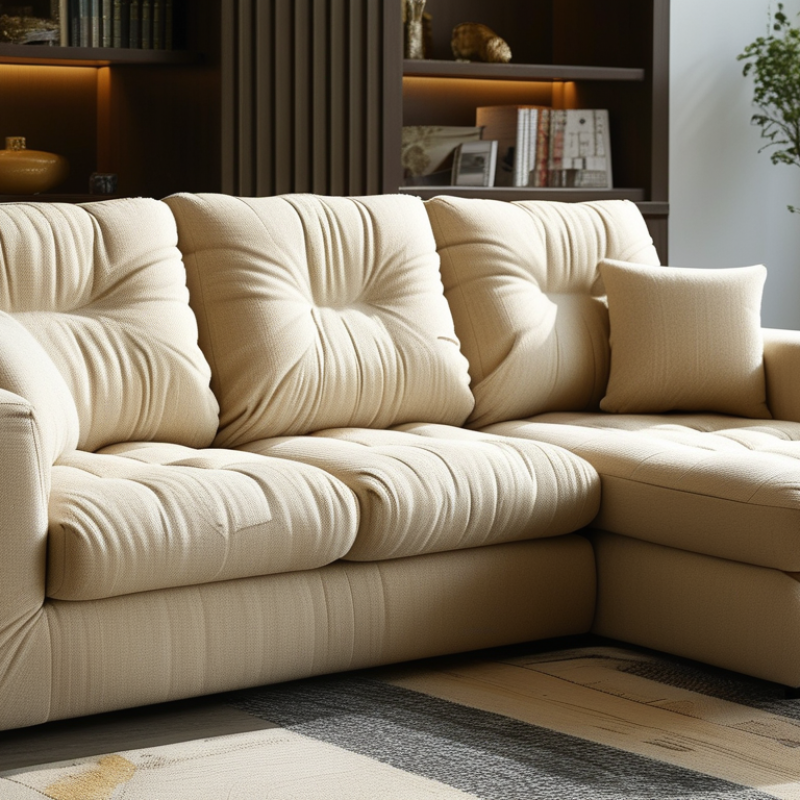
High resilience foam is a flexible polyurethane foam designed to recover quickly after pressure. In sofa testing, it springs back after repeated sitting, rather than staying visibly compressed. Its open-cell structure allows air to move through the cushion. This creates a lighter, more responsive feel.
Standard foam is a broad category. Some types feel firm at first but lose height sooner under daily pressure. High resilience foam usually offers better rebound, support distribution, and shape retention. However, resilience alone does not guarantee long service. Foam density, firmness, cushion thickness, fabric tension, and the sofa frame also matter. A dense foam with poor construction may still disappoint. I have seen cushions fail because the base flexed too much, not because the foam was weak.
Tips: Check both density and firmness before buying. Ask how the foam performs after repeated compression. Sit on the cushion for several minutes, then inspect whether it rises evenly. Rotate loose cushions regularly. Keep them dry and away from strong heat, which can speed material aging. Also, do not judge quality by softness alone. A very soft cushion may feel luxurious briefly, yet provide less daily support. My own judgment has changed here: comfort is personal, and laboratory durability cannot perfectly predict every home.
High-resilience foam lasts longest in sofas because its cell structure helps it recover after repeated compression. Each time someone sits down, the foam cells bend and release stored energy. A resilient structure returns toward its original shape instead of staying flattened. This supports a more even seat surface over years of daily use. It also reduces the deep body impressions often seen in softer, less resilient foam.
The cell network affects more than bounce. A partly open structure allows air to move through the cushion when it is compressed and released. This can reduce heat buildup during long sitting sessions. In practical testing, a cushion that recovers quickly feels supportive after dinner, reading, or several hours of work. Still, foam is not indestructible. High density, correct firmness, and a stable sofa frame matter too. Cell structure alone cannot prevent permanent fatigue.
Tips: Rotate loose cushions regularly, and avoid folding them sharply. Keep the sofa away from strong heat and prolonged sunlight. Check the cushion core, not only its first-day softness. A softer seat may feel comfortable immediately, but it can lose support sooner. I have also found that user weight and sitting habits change results considerably. That detail is easy to overlook. Regular cleaning helps limit moisture and debris entering the fabric, though it cannot repair worn foam.
High resilience foam lasts longest in sofas because it recovers after repeated loading. ASTM D3574 identifies high-resilience foam with at least 55% ball rebound and a minimum density of 2.5 lb/ft³. These figures matter. A denser foam usually contains more polymer structure, helping it support weight without collapsing quickly.
Sagging begins when foam cells remain compressed. High resilience foam uses a more flexible, open-cell structure. When someone stands up, the foam pushes air through its cells and regains much of its original height. ISO 3385 fatigue testing repeatedly compresses foam to examine thickness loss and firmness changes. In a real sofa, that resembles years of sitting in the same favorite corner. The result is slower permanent compression.
Density alone is not enough. Not quite. A poorly designed cushion can still soften if its firmness, cover tension, frame support, or seat depth is unsuitable. ASTM test results also come from controlled samples, not messy living rooms with children, pets, and uneven sitting habits. For better evaluation, upholstery professionals compare density, indentation force deflection, compression-set results, and repeated-fatigue data. A cushion that returns smoothly after thousands of cycles is less likely to develop a visible hollow. Still, no foam stays perfect forever. Gradual softening is normal, while deep, permanent sagging signals a mismatch between material design and daily use.
Why High Resilience Foam Lasts Longest in Sofas?
High resilience foam supports sofa durability through density, firmness, and recovery. Density describes how much foam material fills each cubic metre. Higher density usually resists compression, tearing, and early soft spots more effectively. However, density alone cannot guarantee a durable seat. A dense foam may still feel uncomfortable or recover slowly if its structure is poorly designed.
Firmness controls the initial sitting experience. Softer foam feels welcoming, but it can bottom out under repeated pressure. Very firm foam may resist sagging, yet it can create uncomfortable pressure points. The best choice balances body weight, cushion thickness, and daily use. Recovery matters just as much. After someone stands, high resilience foam should regain its shape quickly. In practical sofa testing, a seat that rises slowly often shows permanent impressions sooner. Still, foam is not magic. Fabric tension, cushion construction, ventilation, and the supporting frame also influence service life. I have found that real households rarely use sofas evenly, which makes durability harder to predict.
Tips: Press the cushion near its center and edge. Compare how quickly each area returns to shape. Check the foam density specification, not only the firmness label. For busy living rooms, choose supportive foam with strong recovery and suitable thickness. Rotate loose cushions regularly. Even good foam benefits from balanced use.
| Foam Category | Typical Density (kg/m³) |
Typical Firmness (ILD at 25% compression) |
Typical Resilience (Ball Rebound) |
Recovery After Compression | Permanent Set After Repeated Use | Typical Sofa Service Potential | Durability Interpretation |
|---|---|---|---|---|---|---|---|
| Low-Density Flexible Foam Economy seating applications | 18–24 | 18–30 lbf (80–133 N) |
35–45% | Slow to moderate | Higher risk of early softening and shape loss | Approximately 2–4 years under frequent use | Lightweight and initially comfortable, but lower density generally provides less fatigue resistance. |
| Medium-Density Flexible Foam General residential seating | 24–32 | 24–36 lbf (107–160 N) |
40–50% | Moderate | Moderate compression-set risk | Approximately 4–7 years under frequent use | A practical balance of cost, comfort, support, and durability for everyday sofas. |
| High-Density Flexible Foam Heavy-use residential seating | 32–40 | 28–42 lbf (125–187 N) |
45–55% | Fast | Lower compression-set risk than medium-density foam | Approximately 7–10 years under frequent use | Higher polymer mass per volume usually improves load-bearing fatigue resistance and shape retention. |
| High Resilience (HR) Foam Premium seat cushions | 35–50+ | 28–45 lbf (125–200 N) |
50–65% | Very fast | Low compression-set risk when properly formulated | Approximately 8–12+ years under frequent use | Its open-cell structure and high resilience support quicker recovery, improved comfort retention, and long-term performance. |
| Very Firm High-Density Foam Support layers and firm seating | 40–60 | 40–55 lbf (178–245 N) |
40–55% | Fast | Low to moderate compression-set risk | Approximately 8–12 years under frequent use | High density improves structural endurance, but firmness alone does not guarantee superior resilience or comfort. |
| Reading the data: Density indicates how much foam material is present per unit volume and is commonly linked with fatigue resistance. Firmness describes the force required to compress the foam and should be selected for comfort and support, not used as a direct substitute for density. Resilience measures how quickly the foam returns energy and shape after loading. Actual service life also depends on cushion thickness, cover tension, seat construction, user weight, temperature, humidity, and daily usage. Values shown are typical industry ranges for flexible polyurethane upholstery foam and are indicative rather than performance guarantees. | |||||||
Why High Resilience Foam Lasts Longest in Sofas?
High resilience foam lasts longer because it recovers after repeated compression. Its lifespan depends on more than the foam label. Foam density, cell structure, cushion thickness, and seat design all matter. ASTM D3574 evaluates indentation force, density, and compression set. These measurements show how well foam resists permanent sagging. However, laboratory results do not fully copy daily family use.
Professional seating standards also offer useful benchmarks. EN 12520:2015 evaluates domestic seating through durability and strength tests, including thousands of loading cycles. Public seating standards may require up to 100,000 dynamic cycles. A sofa exposed to children, pets, heat, and high humidity faces harsher conditions. The frame and suspension are equally important. Weak webbing can make excellent foam feel tired early. A dense cushion can still fail on a poor foundation. That is easy to overlook.
Tips: Choose foam with clear density and compression-set data. Rotate loose cushions every two weeks. Keep them away from radiators and direct sunlight. Vacuum dust from seams, but avoid aggressive beating. Check the support beneath the foam yearly. In practice, people often buy by softness alone. That is a mistake. I would also question vague claims such as “lasts forever.” No cushion does. Weight, sitting habits, and maintenance change the result. A small firmness loss may be normal, while a visible hollow suggests deeper support failure.
Higher-density high-resilience foam generally provides better load distribution and slower permanent deformation. The service-life figures shown are typical planning estimates for residential sofa seating; actual performance also depends on daily usage, cushion thickness, user weight, support structure, moisture, heat, and maintenance.
High resilience foam is flexible polyurethane foam that quickly recovers after pressure. It feels responsive and resists lasting compression.
It usually rebounds faster, distributes support better, and retains its shape longer. Standard foam may lose height sooner under daily use.
Its open-cell structure helps air move through the cushion. After someone stands, the foam regains much of its original height.
Density matters, but it is not the only factor. Firmness, thickness, fabric tension, frame support, and suspension also affect durability.
Look for density, firmness, compression-set results, and repeated-fatigue data. Controlled testing helps, but real homes are less predictable.
Sit for several minutes, then stand up and inspect the surface. The cushion should rise evenly without a deep hollow.
Rotate loose cushions every two weeks. Keep them dry and away from radiators, strong heat, and direct sunlight.
Yes. Weak webbing or a flexible base can make good foam feel tired quickly. The foundation matters.
Not always. Softness may feel pleasant at first, but it can provide less daily support. Comfort remains personal.
No cushion stays perfect forever. Gradual softening is normal, while deep sagging may show a design or support mismatch.
High resilience foam is engineered with a more open, flexible cell structure than standard foam, allowing it to respond quickly to pressure and return to its original shape. This structure helps distribute body weight evenly, improves air circulation, and supports consistent comfort over many years. Unlike lower-quality foam that may flatten permanently, high resilience foam offers stronger resistance to sagging and compression.
Which sofa filling lasts the longest without deforming? In most cases, high resilience foam is a strong choice because its durability depends on balanced density, firmness, and recovery ability. Higher density generally provides better long-term support, while the right firmness prevents excessive sinking without making the sofa uncomfortable. However, lifespan also depends on daily use, weight distribution, humidity, temperature, cushion design, and regular rotation or maintenance. When these factors are properly managed, a high resilience foam sofa can preserve its shape, comfort, and supportive feel for significantly longer.

Govind Sofa