A faux leather sofa can look smooth and convincing in a showroom, then develop tiny cracks along the seat edge or armrest years later. One day, a dark flake appears on the floor. Soon, the surface may feel rough or expose the fabric underneath. Why do faux leather sofas peel over time? The answer usually involves several factors, not one simple cause.
Faux leather often has a thin polyurethane or PVC coating over a fabric backing. Heat, sunlight, body oils, cleaning chemicals, and repeated friction can gradually weaken that surface. Low-quality materials may break down sooner, but even a well-made sofa can suffer in a hot room or under daily use. Small care choices matter. A harsh cleaner or damp cloth left on the upholstery may do more harm than expected.
Peeling is not always proof that an owner neglected the sofa. Sometimes the coating has simply reached the end of its useful life. That distinction matters when deciding whether cleaning, patching, or replacement is realistic. This guide explores the common reasons faux leather sofas peel, the early signs to watch for, and practical ways to slow further damage. It also looks at what care can—and cannot—fix. There is no perfect remedy. Knowing the material’s limits can help you set fair expectations before buying or repairing a sofa.
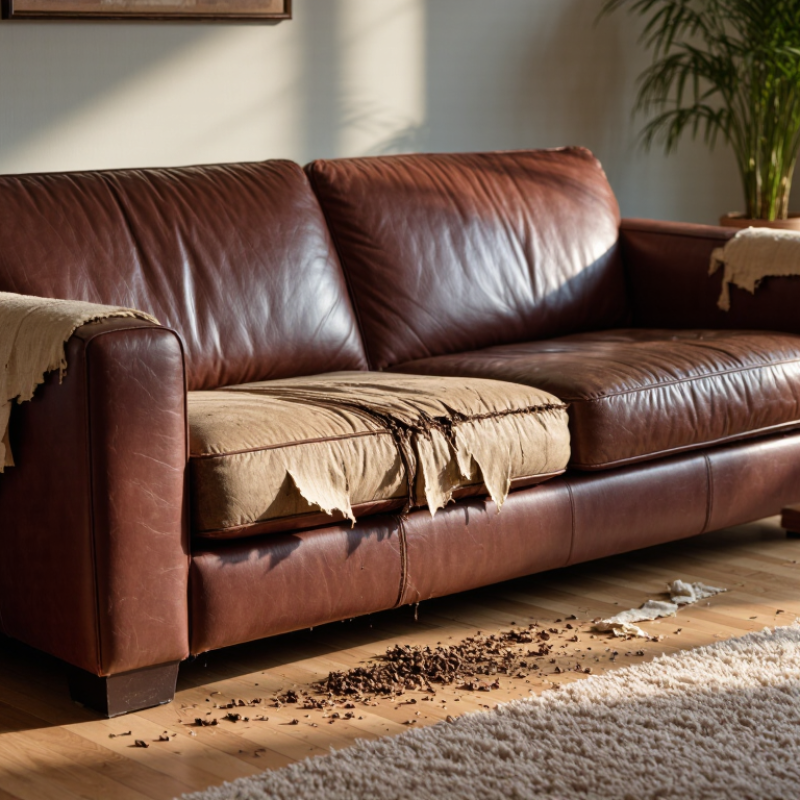
Faux leather is not one material. It usually has a fabric backing coated with polyurethane or PVC. The backing gives the upholstery support, while the coating creates the visible surface. Manufacturers may press a grain pattern into the coating to imitate leather. A thin finishing layer can add color, shine, or resistance to everyday marks. The texture may look convincing, but the surface is still a manufactured layer. That distinction matters.
Peeling can start when the coating loses its bond with the backing. Heat, sunlight, frequent friction, and harsh cleaners may speed up wear, though results vary by material and use. Small cracks around seat edges can expose the fabric beneath. It is easy to blame poor care alone; sometimes, the coating itself simply wears sooner than expected.
Tips: Check the care label before cleaning. Use a soft, slightly damp cloth, then dry the surface gently. Avoid abrasive pads and strong solvents, which can damage the finish. Keep the sofa away from direct sunlight and hot radiators when possible. If peeling has begun, rubbing or applying household glue may make the damage more visible.
| Topic | What It Means | How It Can Affect a Sofa | Practical Care or Prevention |
|---|---|---|---|
| What faux leather is | Faux leather is a manufactured material, usually made from a textile backing covered with a polymer surface. Common surface materials include polyurethane (PU) and polyvinyl chloride (PVC). | The surface layer provides the leather-like appearance and feel, while the backing supports it. The exact construction varies by product. | Check the product’s material and care information; “faux leather” does not describe one single formulation. |
| How the surface is made | A polymer coating or film is applied to a fabric backing. Texture and color can be added during finishing, for example by embossing or applying a printed or protective top layer. | The coating, backing, and bond between them all contribute to how the surface handles use and aging. | Use the manufacturer’s care instructions, since cleaning and heat tolerance differ between materials and finishes. |
| Wear and repeated flexing | Seats, arms, and other high-contact areas bend and rub during everyday use. | Repeated flexing and abrasion can wear the finish or contribute to cracks and flaking, especially in frequently used areas. | Reduce friction from sharp objects, rough clothing, and pets’ claws. Rotate cushions where the design allows. |
| Heat and sunlight | Direct sunlight and nearby heat sources can warm and age the surface over time. | Heat and ultraviolet exposure may contribute to fading, drying, or loss of flexibility, depending on the material and its formulation. | Keep the sofa out of prolonged direct sun and away from radiators or other strong heat sources. |
| Moisture and hydrolysis | Some polyurethane coatings can deteriorate through hydrolysis, a chemical reaction involving moisture. Its rate depends on the coating formulation and storage or use conditions. | As a coating breaks down, it may become weak, sticky, cracked, or prone to peeling. | Clean spills promptly and avoid leaving the sofa in persistently damp or poorly ventilated conditions. |
| Harsh cleaners | Solvents, abrasive cleaners, and products not intended for the specific upholstery may damage a coating or its finish. | Repeated or unsuitable cleaning can dull, weaken, or remove surface layers. | Use only cleaners approved for the material. Test them first on a small, inconspicuous area. |
| Bonding or finish failure | The surface coating, finishing layers, and fabric backing must remain compatible and bonded as the sofa is used. | If a layer loses adhesion or becomes brittle, it can separate from the layer beneath it and appear as peeling. | Avoid scraping or pulling at loose material; follow care guidance and seek repair advice if the damage spreads. |
| Why peeling varies | Material type, coating formulation, construction, exposure, cleaning, and frequency of use all affect how a particular sofa ages. | There is no single predictable service life for all faux leather sofas, and peeling does not always have one cause. | Review care instructions and warranty terms, and address early cracking or flaking before it expands. |
Note: Faux leather is a broad category. PU and PVC surfaces can differ in construction and performance, so specific care recommendations should come from the sofa’s manufacturer.
Its coated surface can separate from the fabric or synthetic backing. Weak bonding, uneven coating, or a thin top layer may contribute. Small flaws matter.
Check seat edges, armrests, seams, and folded areas. These spots bend or rub often, so tiny cracks can grow there.
Yes. Repeated warmth from a sunny window or radiator can make the surface less flexible. A dull patch may appear before peeling.
Humidity, damp clothing, and spills can weaken some coatings, especially near seams. Wipe spills with a soft, slightly damp cloth, then dry the area.
Sliding across the seat, rough clothing, pet claws, and repeated pressure can wear the same spots. Rotating cushions may help, but it is not a cure.
Look for lifted edges, bubbles, or sticky areas along seams and folds. Ask to see actual abrasion and adhesion test results, not just durability claims.
No. Abrasion and adhesion tests help compare materials, but they cannot show every defect inside a finished cushion. Not a lifespan guarantee.
Care may slow further wear, but it cannot repair a coating that has started splitting. I might be overreading one loose edge, so inspect it again before judging.
Why do faux leather sofas peel over time? The answer often lies in how the material is made and how the sofa is used. Faux leather typically has a fabric backing coated with a synthetic surface layer. The coating’s thickness, quality, and bond to the backing can affect how well it holds up. Sofa construction also matters: poorly supported areas may stretch or flex more, putting extra strain on the surface. Manufacturing flaws, such as uneven coatings or weak adhesion, can make peeling begin sooner.
Heat, sunlight, moisture, body oils, friction, and frequent use can gradually weaken or dry out the coating, causing it to crack and lift. To slow further damage, keep the sofa away from direct heat and strong sunlight, clean it gently with suitable products, and wipe away spills promptly. Small areas of peeling may be improved with a repair product made for coated upholstery, but extensive damage may not be reversible. Regular gentle care can help preserve the surface for longer.

 Govind Sofa