China Top 10 Sofa Floor Protectors How to Prevent Scratches?

Time:2026-10-05 Author:Madeline
0%

Hardwood floors add warmth and value to a room, but a heavy sofa can leave lasting marks. Dust trapped beneath a leg may act like sandpaper during everyday movement. Felt pads can help, yet thin or poorly attached pads often flatten within weeks. The right sofa floor protector must match the furniture’s weight, leg shape, and floor finish. It should also stay secure when people sit, stand, or shift position.

This guide reviews China’s top 10 sofa floor protectors through practical criteria, including material strength, grip, moisture resistance, installation, and long-term stability. The selection includes felt pads, rubber cups, silicone covers, clear mats, and adjustable furniture glides. Each option serves a different room and sofa design. A rubber cup may suit a broad wooden leg, while a transparent mat works better beneath a movable recliner. How to prevent a sofa from scratching hardwood floors? Start by cleaning the floor and inspecting every sofa leg. Remove grit, check for rough edges, and measure the contact area before buying protection. In real homes, installation quality matters as much as product quality. I have seen expensive protectors fail because the floor was dusty or the adhesive was undersized. No protector is perfect. Even strong materials need regular inspection, especially in humid rooms. The recommendations here aim to support safer choices, but users should test one protector first. A small trial can reveal slipping, discoloration, or pressure marks before the whole sofa is protected.
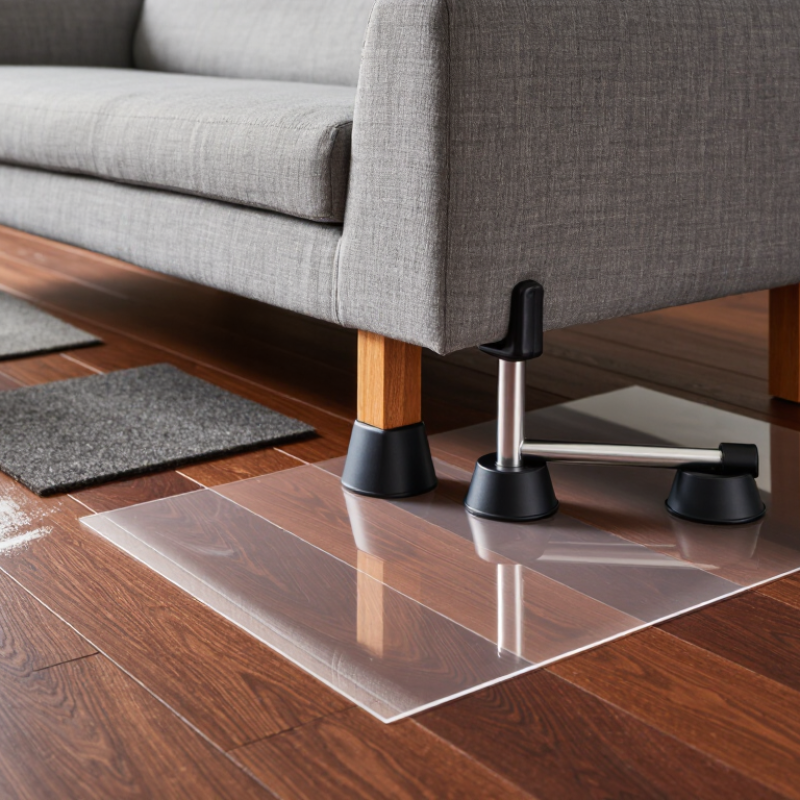
China Top 10 Sofa Floor Protectors How to Prevent Scratches?

What Are Sofa Floor Protectors and Why Do They Matter?

Sofa floor protectors are small pads, cups, or mats placed beneath sofa legs. They create a barrier between heavy furniture and the floor surface. In homes across China, common choices include felt pads, rubber cups, silicone covers, and transparent plastic mats. Each type serves a different purpose. Felt reduces light scratches on wood. Rubber improves grip on tile. Silicone works well when legs move slightly.

These protectors matter because a sofa can weigh hundreds of kilograms after regular use. Sitting, shifting, and cleaning create repeated pressure at the same points. Over time, this pressure may leave dents, scuffs, or dark marks. A suitable protector also reduces noise when the sofa moves. From practical installation experience, size matters more than appearance. A thin pad under a wide metal leg may fail quickly. I once underestimated this detail, and the pad folded within weeks.

Tips: Measure every sofa leg first. Clean the floor before installation. Choose a protector wider than the contact area. Check it monthly for dust, moisture, or compression. Replace damaged pieces promptly. On uneven floors, test one protector for several days before fitting all legs. This small trial can prevent wasted effort.

How to Choose the Right Protector for Different Floor Types

Choosing a sofa floor protector starts with the floor, not the furniture. Hardwood needs thick, clean felt pads that spread weight without trapping grit. The National Wood Flooring Association recommends indoor humidity around 30% to 50%. Stable humidity helps reduce wood movement, which can worsen pressure marks.

For laminate, use dense felt or a smooth polyethylene cup. Avoid rough rubber backs; they may leave marks after long contact. Tile usually tolerates rubber or silicone cups, but textured tiles need wider protectors for better stability. Vinyl flooring requires extra care. Some rubber and plastic materials can cause staining or surface migration. Check the flooring manufacturer’s compatibility guidance before installation. On carpet, broad furniture cups prevent deep compression, although they may make the sofa slide less easily.

Tips: Match the protector’s diameter to the sofa leg. Clean both surfaces first. A 2-millimeter grain of sand can act like a cutting tool under heavy weight. Inspect the pads monthly, especially after moving the sofa. The U.S. Environmental Protection Agency advises keeping indoor humidity between 30% and 50%, which also supports safer wood-floor conditions. I once assumed thicker pads were always better. They were not. A thick pad collected dust and created a dull ring. Replace damaged protectors immediately, and test one hidden area for 48 hours.

Top 10 Sofa Floor Protectors for Preventing Scratches

Top 10 Sofa Floor Protectors for Preventing Scratches include felt pads, rubber furniture cups, silicone cups, cork discs, EVA foam pads, polyurethane caster cups, non-slip furniture mats, clear vinyl shields, wooden glides, and adjustable risers. Each option suits different floors and sofa weights. Felt pads work well on clean wood, while rubber cups provide stronger support under heavy legs. Silicone cups resist moisture and stay flexible. Cork discs feel natural, but they may compress over time.

EVA foam pads soften movement and reduce pressure marks. Polyurethane caster cups suit sofas with wheels, especially on smooth flooring. Non-slip mats help prevent sliding during daily use. Clear vinyl shields protect delicate surfaces without hiding the floor pattern. Wooden glides look neat, yet they need smooth edges and careful fitting. Adjustable risers add height, but their protective bases must cover the full contact area.

Measure each sofa leg before buying. A loose protector can collect grit underneath. That grit may scratch flooring like sandpaper. Clean the floor and protector weekly. Do not drag the sofa, even with pads installed. A small lift is safer. Test one protector in a hidden area for two days. Some rubber materials can leave marks on certain vinyl floors. This is easy to overlook. Recheck the pads after moving furniture, because weight can shift them slightly. Personally, I would replace compressed or cracked protectors rather than trust their original appearance.

How to Install and Position Sofa Floor Protectors Correctly

Sofa floor protectors work best when they match the sofa’s leg shape and the floor material. Before installation, remove dust, grit, and moisture from each contact area. Small particles can act like sandpaper under heavy furniture. Measure every leg, because some sofas have slightly different feet. A clean surface matters.

Lift the sofa carefully instead of dragging it across the room. Ask another person to help with larger frames. Center each protector directly beneath the leg, keeping its edges fully supported. For adhesive protectors, press firmly for several seconds and allow the adhesive to settle before replacing the sofa. For cups or rubber pads, check that the leg sits inside the middle, not near the rim. The sofa should remain level after installation. If it rocks, reposition the protector rather than forcing the frame.

Tips: Place protectors on a dry floor. Test one leg first. After one week, inspect for slipping, dust, or uneven pressure. Felt pads may need more frequent cleaning on smooth floors, while rubber pads can grip better but may leave marks on delicate surfaces. Never assume thicker protection is automatically safer. I once positioned a pad too close to the edge, and repeated movement pushed it outward. That mistake showed me that alignment matters as much as material. Recheck the protectors after moving the sofa or cleaning underneath it.

How to Maintain and Replace Sofa Floor Protectors Safely

Sofa floor protectors work best when they stay clean, dry, and correctly positioned. Inspect them every few weeks, especially after moving the sofa. Look for cracks, flattened pads, sharp edges, or trapped grit. Small stones can scratch wood flooring like sandpaper. Remove the sofa carefully with another adult. Do not drag it across the floor.

Wash removable protectors with mild soap and warm water. Dry them completely before reinstalling. Moisture trapped beneath a pad may stain timber or encourage odor. For fixed protectors, wipe the surface with a soft cloth. Avoid strong solvents, abrasive brushes, and excessive water. Check that each protector sits evenly under the sofa leg. Uneven support can create pressure points and make the sofa wobble.

Replace a protector when it becomes brittle, compressed, split, or permanently dirty. Choose a size that covers the full contact area without extending dangerously beyond the leg. Felt, rubber, and plastic have different effects on wood, tile, and carpet, so check the flooring guidance and the protector’s instructions. Test one leg first for several days. This small step prevents a costly mistake. I once assumed a thicker pad was safer, but it shifted more easily. Secure fitting matters more than thickness. Lift the sofa during replacement, keep fingers clear, and ask for help with heavy furniture. After installation, gently rock the sofa and inspect the floor for movement or marks.

FAQS

What are sofa floor protectors?

They are pads, cups, mats, or covers placed beneath sofa legs. They separate heavy furniture from the floor. Common materials include felt, rubber, silicone, cork, foam, and plastic.

Why do sofa floor protectors matter?

Sofa legs create repeated pressure when people sit, move, or clean nearby. Protectors can reduce scratches, dents, dark marks, and movement noise. Small details matter.

Which protector suits a wooden floor?

Felt pads often suit clean wooden floors and reduce light scratches. Choose a pad wider than the leg contact area. Remove grit regularly, because grit can scrape wood like sandpaper.

Which protector works well on tile or smooth floors?

Rubber cups can improve grip under heavy sofa legs. Non-slip mats may also reduce sliding. However, some rubber materials can mark delicate flooring, so test one hidden area first.

How should I choose the correct protector size?

Measure every sofa leg before buying. Some legs may differ slightly in shape or width. The protector should fully support the contact area without loose edges.

How do I install sofa floor protectors correctly?

Clean and dry the floor first. Lift the sofa instead of dragging it. Center each protector beneath the leg, then check that the sofa stays level.

Should I test a protector before installing all of them?

Yes. Test one protector in a hidden area for several days. On uneven floors, this can reveal slipping, marks, or poor support. Test one leg.

How often should sofa floor protectors be checked?

Inspect them monthly for dust, moisture, cracks, slipping, or compression. Clean the floor and protectors regularly. Replace damaged pieces promptly.

Can thicker protectors always provide better protection?

No. Thickness alone does not guarantee stability or safety. A thin protector may fail under a wide metal leg, while an oversized one may shift. Appearance can mislead.

What mistakes should I avoid?

Do not drag the sofa, even with protectors installed. Avoid placing a pad near the leg’s edge. I once made that mistake, and repeated movement pushed it outward. Alignment matters more than expected.

Conclusion

Sofa floor protectors are practical pads, cups, or covers placed beneath sofa legs to distribute weight, reduce movement, and prevent scratches, dents, and scuff marks. Choosing the right protector depends on the flooring: soft felt or fabric works well on hardwood and laminate, while rubber or textured materials provide stronger grip on tile, stone, and carpet. The most effective options include adhesive felt pads, slip-resistant rubber cups, silicone covers, thick furniture coasters, protective mats, and adjustable leg protectors. Each should match the sofa’s weight, leg shape, and floor surface.

How to prevent a sofa from scratching hardwood floors? First, clean both the floor and sofa legs, then attach or position protectors evenly under every contact point. Check that the sofa remains stable and does not slide or tilt. Regularly remove dust and moisture, inspect the protectors for flattening or damage, and replace them when they become worn. Careful installation and routine maintenance provide lasting floor protection while keeping the sofa safe and comfortable to use.

Madeline

Madeline

Madeline is a dedicated marketing professional with a wealth of expertise in our company's core offerings. With a keen understanding of the industry, she brings a unique perspective to her role, consistently delivering high-quality content that highlights the superior aspects of our products. As......