How to Style a Grey Sofa with Colorful Pillows

Time:2026-10-15 Author:Amelia
0%

A grey sofa offers a calm, adaptable foundation, but it can also make a room feel flat without contrast. This is why many homeowners ask, “How to style a grey sofa with colorful pillows?” The answer involves more than choosing bright covers. It requires balance, scale, texture, and a clear relationship with the room’s existing colors.

Recent design research supports this approach. The 2024 Houzz & Home Study shows that homeowners continue investing in comfortable, personalized living spaces. Meanwhile, Pinterest Predicts 2024 reflects growing interest in expressive interiors and more confident color choices. The 1stDibs 2024 Designer Survey also identifies saturated shades, including blue, green, and red, as influential colors in contemporary interiors. These reports suggest a useful direction, not a strict decorating rule. Trends change quickly.

Experience matters here. A mustard pillow can warm a cool grey sofa, while cobalt blue creates sharper visual energy. Terracotta adds softness beside pale grey, especially with natural linen curtains or a walnut coffee table. Small changes matter. Texture does the work.

This guide will explain how to combine colorful pillows without making the sofa look chaotic. It will cover color ratios, pillow sizes, fabric combinations, and practical placement. A common mistake is using several unrelated bright colors at once. I have made that mistake myself. The result looked exciting in a showroom, but restless at home.

Good styling should survive real life, including afternoon glare, pet hair, and uneven cushions. Test in daylight. Consider the wall color, flooring, and nearby artwork before buying anything. A thoughtful pillow arrangement can make a grey sofa feel welcoming, layered, and distinctly personal.
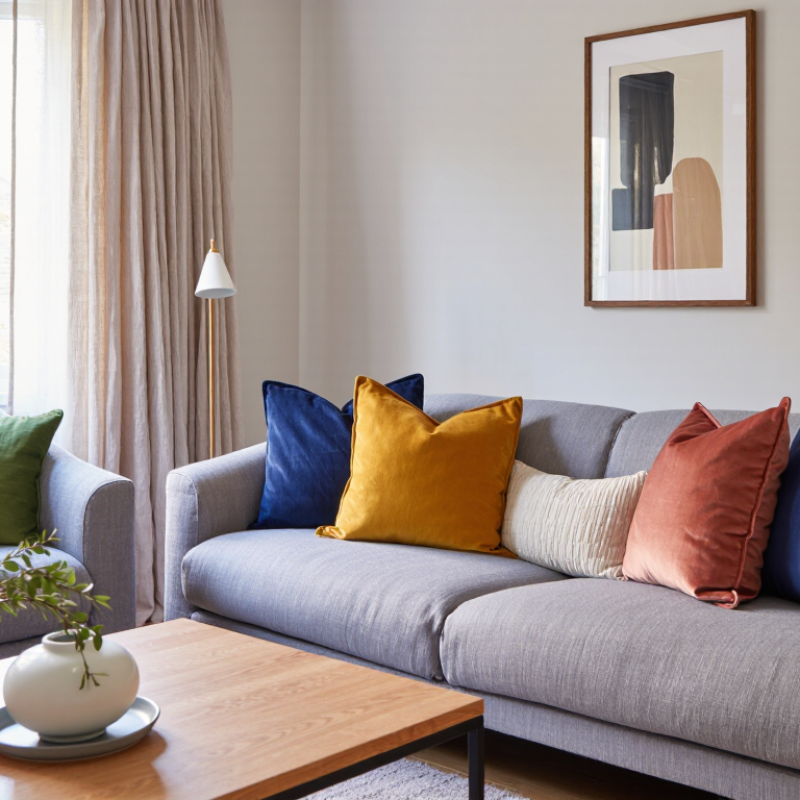
How to Style a Grey Sofa with Colorful Pillows

Choosing the Right Color Palette for a Grey Sofa

A grey sofa is a useful foundation because its quiet tone supports many color directions. Warm shades, such as rust, mustard, and terracotta, create a welcoming living room. Blue, teal, and forest green feel calmer and more tailored. For a softer look, combine blush, cream, and muted lavender with textured pillows.

I usually begin with one dominant color and add two related accents. For example, teal can lead, while pale blue and natural beige provide balance. Keep one pillow patterned, one lightly textured, and one mostly plain. This arrangement prevents the sofa from looking busy. Size matters too. A large sofa may need several generous cushions, while a compact design can feel crowded quickly. I once used too many strong colors in a small room. The result felt energetic, but not restful.

Tips: Place the brightest pillow near eye level, then repeat its color in a small object across the room. Use warm and cool tones carefully, because grey can make unbalanced colors appear harsher. Check the palette in daylight and evening light. Fabric changes color more than expected. If the room already has colorful artwork or a rug, borrow one shade instead of introducing another. A practical test is simple: remove one pillow and wait a day. Sometimes restraint works better.

Selecting Pillow Sizes, Shapes, and Textures

A grey sofa gives colorful pillows a calm, reliable background. In my styling work, I start by measuring the seat depth and back height. Standard pillows often look lost on a deep sofa. For a medium sofa, I usually layer two 20-inch squares at the corners. Add 18-inch pillows in front for a fuller, more comfortable arrangement. Keep one smaller lumbar pillow near the center. It supports the lower back without blocking the sofa’s clean lines. Measure first. Guessing can make the arrangement feel crowded.

Shapes create rhythm. Square pillows provide structure, while rectangular lumbars soften the middle. A round cushion can add contrast, but one is usually enough. Too many unusual shapes make the sofa look staged. I like placing the brightest color in a smaller pillow, then repeating that color subtly elsewhere. This helps the palette feel intentional rather than random. Leave a few inches of grey visible between pillow groups. That breathing room keeps vivid colors from becoming visually noisy.

Texture matters as much as color. Combine a smooth cotton cover with nubby woven fabric, brushed velvet, or lightly slubbed linen. Different surfaces catch daylight differently, especially beside a window. I avoid using every texture at once; three or four is plenty. Soft covers suit relaxed rooms, while firmer inserts hold sharper shapes. Feather-filled inserts feel inviting, though they need regular plumping. I sometimes overfill the front pillows, and they lose their easy comfort. A slightly imperfect arrangement can feel more lived-in. Sit down and test it. If your shoulder meets a hard edge, change the insert or move the pillow.

How to Style a Grey Sofa with Colorful Pillows

Suggested pillow mix for a standard three-seat grey sofa, balancing size, shape, and texture.

Start with two large square pillows at the back, layer medium squares in complementary colors, and finish with one lumbar or round pillow. Use varied textures such as velvet, linen, boucle, or woven fabric to add depth without overwhelming the grey sofa.

Layering Colorful Pillows for Balanced Visual Appeal

A grey sofa gives colorful pillows a calm, useful background. The challenge is layering color without making the seating area feel noisy. The 2024 1stDibs Designer Survey placed red among leading accent colors, selected by 24% of surveyed designers. Use red carefully: one rust pillow can warm cool grey, while a second pillow in muted coral keeps the effect softer.

Start with three sizes. Place two larger square pillows at the sofa’s corners, then add medium pillows in contrasting colors. Finish with one smaller lumbar cushion near the center. This creates depth without blocking the sofa’s clean shape. Keep one shared element, such as a repeated stripe, rough linen texture, or pale blue undertone. It acts like a visual thread. Keep it subtle.

A useful ratio is 60% quiet color, 30% supporting color, and 10% vivid accent. This reflects common professional styling guidance, while the 2024 Houzz & Home Study shows that homeowners continue investing in personalized living spaces. Place the strongest color away from the room’s busiest area. Otherwise, the eye may stop there. I sometimes over-layer pillows and regret it the next morning. Remove one. The arrangement often breathes better.

Test the grouping in daylight and under evening lamps. Grey can look blue, beige, or green depending on nearby surfaces. A bright yellow pillow may appear cheerful at noon, then harsh at night. Trust the room, not only the fabric swatch.

Arranging Pillows for Different Sofa Styles

How to Style a Grey Sofa with Colorful Pillows

Arranging Pillows for Different Sofa Styles

A grey sofa gives colorful pillows a calm background. The arrangement should follow the sofa’s shape, depth, and back support. On a tight-back sofa, use fewer pillows so the clean outline remains visible. Try two large square pillows at the corners, then add one smaller patterned pillow in the center. Keep the colors related, such as mustard, teal, and muted coral.

For a loose-back sofa, layer pillows by size and firmness. Place larger pillows against the back, with medium cushions in front. Add one textured lumbar pillow across the middle. Leave a small gap between each group. This keeps the seats usable instead of making them look crowded.

Sectional sofas need a different balance. Build separate pillow arrangements at the outer ends and keep the corner more relaxed. A chaise works well with one long lumbar pillow and a soft square cushion. Avoid filling the chaise completely; people still need room to stretch. Deep sofas can handle larger pillows, while shallow sofas need slimmer designs. Too many oversized cushions can steal sitting space.

I once matched every pillow too carefully, and the sofa looked flat. A slightly unexpected color helped. That choice was not perfect, but it felt more natural. For a curved sofa, repeat rounded shapes and avoid stiff, sharp arrangements. Check the pillows from several seats before deciding. Some patterns look balanced from the front but messy from the side.

Refreshing the Look with Seasonal Pillow Colors

A grey sofa offers a calm base for changing seasonal colors. Its neutral surface can handle warm, cool, and earthy pillow shades without looking crowded. In spring, try soft sage, pale yellow, and muted coral. These colors bring the feeling of fresh leaves and early sunlight indoors.

Keep the arrangement practical. Place two larger pillows at the back, then add smaller cushions in front. Use cotton or linen during warmer months because these fabrics feel light and breathable. In autumn, replace bright tones with rust, olive, mustard, and deep plum. A textured pillow can add warmth, especially when the room has smooth flooring or bare walls. Leave a little grey visible. Too many colors may weaken the room’s visual balance.

Winter allows richer shades, such as navy, forest green, and burgundy. Velvet or woven covers can make the sofa feel warmer, but fabric texture should match daily use. If children or pets share the room, pale colors may require more maintenance. I once chose too many patterned pillows, and the sofa looked busy rather than inviting. Reducing the patterns fixed the problem. Color samples can also look different under evening lighting, so test them beside the sofa at several times of day. Rotate only a few covers each season, and store the unused ones in a dry, covered place.

FAQS

Why is a grey sofa a useful base for colorful pillows?

Grey supports many color directions without competing strongly. Warm shades feel welcoming, while teal, blue, and forest green feel calmer.

How many colors should be used with a grey sofa?

Choose one dominant color and two related accents. For example, use teal with pale blue and natural beige. More colors may feel restless.

Which pillow colors create a softer atmosphere?

Blush, cream, and muted lavender create a gentle look. Add textured covers for warmth. Check them in daylight and evening light.

What pillow sizes work well on a medium sofa?

Try two 20-inch square pillows at the corners. Add 18-inch pillows in front and one smaller lumbar pillow near the center. Measure first.

How can different pillow shapes improve the arrangement?

Square pillows provide structure, while rectangular lumbar pillows soften the middle. One round cushion can add contrast. Too many unusual shapes may look staged.

Which textures work well together?

Combine smooth cotton, nubby woven fabric, brushed velvet, or lightly slubbed linen. Three or four textures are usually enough. Do not use everything.

How should pillows be arranged on a loose-back sofa?

Place larger pillows against the back and medium cushions in front. Add one textured lumbar pillow across the middle. Leave small gaps between groups.

How should pillows be arranged on a sectional sofa?

Create separate groups at the outer ends. Keep the corner more relaxed. Leave space on the chaise for stretching. People need room.

How can a curved sofa look balanced?

Repeat rounded shapes and avoid stiff arrangements. View the pillows from several seats before deciding. A pattern may look balanced from the front but messy from the side.

How can an arrangement feel less crowded?

Keep some grey visible between pillow groups. Remove one pillow and wait a day. Restraint may work better, though my first arrangement was often too careful.

Conclusion

How to style a grey sofa with colorful pillows? Start by choosing a thoughtful color palette that complements the sofa while reflecting your personal taste. Bright tones can create an energetic atmosphere, while muted shades offer a calmer, more refined look. Combine different pillow sizes and shapes to add depth, and introduce varied textures such as woven, soft, or patterned fabrics for a more inviting arrangement.

Layer the pillows from largest to smallest, placing solid colors behind bolder designs to create balanced visual appeal. The best arrangement may vary depending on the sofa style: a structured sofa benefits from neat symmetry, while a relaxed sectional can support a more casual, layered display. To keep the room feeling fresh, update the pillow colors seasonally, using light, cheerful tones in warmer months and richer, cozier shades during colder seasons.

Amelia

Amelia

Amelia is a seasoned marketing professional with a wealth of expertise in our company’s core offerings. With an unwavering passion for driving growth and innovation, she plays a pivotal role in shaping our marketing strategies and enhancing brand visibility. A key aspect of her responsibilities......