5 Best Differences Between Real and Faux Leather Furniture

Time:2026-10-30 Author:Amelia
0%

Real and faux leather can look nearly identical under showroom lights. Yet their differences become clear when you touch the surface, inspect the edges, or live with the furniture for years. What is the difference between real leather and faux leather furniture? The answer involves more than price. Material, construction, comfort, maintenance, and aging all matter.

Leather-restoration specialist David Mesquita’s work offers a useful care principle, paraphrased here: identify the finish before choosing a cleaner. A soft, matte surface may need different care from a glossy, coated one. Labels can help, but terms such as “genuine leather” and “leather match” can still confuse shoppers. Look closely. Check the product details. Ask what covers each panel, including the sides and back.

This guide compares five practical differences: material and texture, appearance over time, durability, cleaning needs, and cost. You’ll learn why real leather may develop wrinkles, color variation, and a lived-in patina, while faux leather often keeps a more uniform finish. Neither option is perfect. Real leather can scratch, fade, and require attentive care; faux leather may peel or crack as its surface coating wears. That matters. A chair beside a sunny window may age differently from one in a quiet, low-traffic room. These details deserve a second look before you buy.
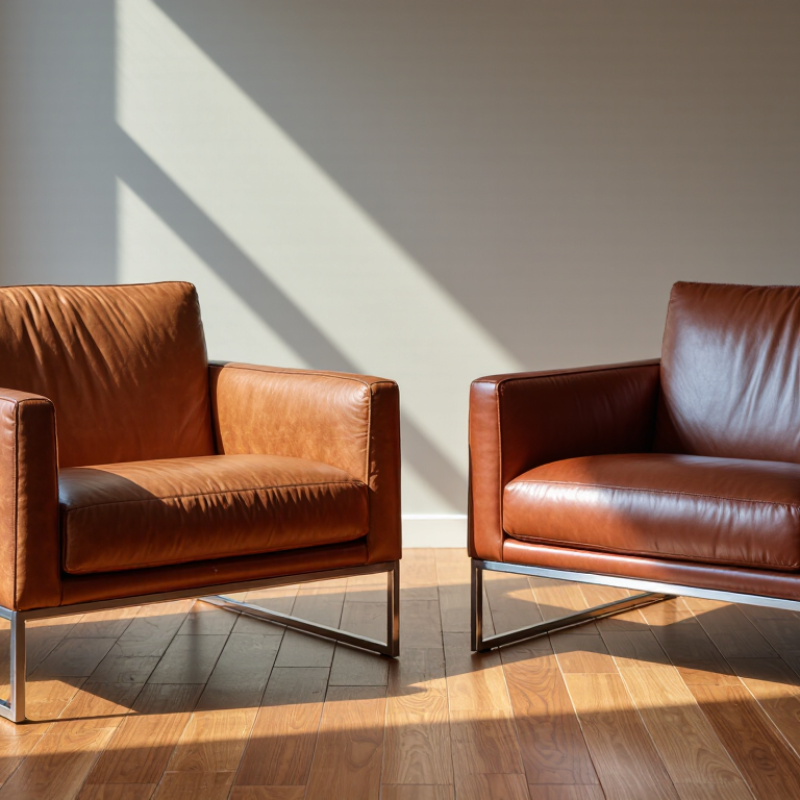
5 Best Differences Between Real and Faux Leather Furniture

Material Composition: How Real and Faux Leather Are Made

Real leather begins as animal hide, which is cleaned, tanned, and finished to make it durable and flexible. Tanning stabilizes the hide, while dyes and protective coatings create different colors and levels of sheen. Because the grain is natural, small marks and variations may remain. No two hides look exactly alike.

Faux leather is made differently. Most versions have a textile backing, such as polyester, covered with a plastic-based layer, often polyurethane or PVC. That layer is embossed or treated to imitate leather grain. Some alternatives use different coatings, so the label matters. That is the difference.

The distinction sounds simple, but the surface alone can be misleading. A finely textured faux material may look convincing, while heavily finished real leather may feel smooth and uniform. When examining furniture, check product details for the material and construction, not just terms like “leather-look.” A cut edge or hidden underside may reveal the fabric backing, though upholstery panels can make this difficult to inspect. Even experienced shoppers can misjudge by touch; I would not rely on feel alone.

Surface Texture and Appearance: Natural Grain vs. Manufactured Finish

Real leather rarely looks perfectly even. Its grain often shifts across a cushion, with tiny pores, shallow creases, and subtle color changes. Look closely near a seam or cushion edge. The surface may show marks that do not repeat in a neat pattern. In daylight, these variations can create soft highlights and darker folds. It may feel slightly warm and supple, though thickness and finish affect the touch. Small irregularities are normal.

Faux leather is usually made to look more consistent. Its grain may be embossed, with similar shapes repeated across broad panels. The finish can appear smooth or slightly glossy, and the color often stays uniform under changing light. Check the same area from different angles. A repeated texture can become easier to spot. Not always obvious. Some manufactured finishes imitate natural grain convincingly, so appearance alone is not proof. I would compare several details, including the surface, edges, and how the material bends. A quick glance can mislead; even close inspection has limits.

Durability and Aging: Wear Patterns and Long-Term Performance

Durability and Aging: Wear Patterns and Long-Term Performance

Real leather often develops a patina: softened edges, slight color shifts, and creases where people sit. These changes can look natural, but they are not automatic signs of quality. Sunlight, body oils, pets, and cleaning habits affect the result. Faux leather usually keeps a more uniform surface at first. Over time, however, its coating may crack or peel, especially along seams and seat edges. Construction and care matter, too. A well-made faux cover may outlast neglected leather; material alone cannot predict lifespan.

For a useful comparison, inspect published test methods rather than treating one number as a lifespan promise. The Association for Contract Textiles recommends 30,000 Wyzenbeek double rubs for general-use woven upholstery and 50,000 for high-traffic settings. Those benchmarks apply to woven fabrics, not directly to leather or faux leather. ISO 11640:2018 instead measures leather’s color fastness to rubbing. Different tests, different questions. A rub-test result does not recreate years of abrasion, sunlight, or repeated flexing, so claims based on it deserve a careful read.

Tips: Check the seat front, arm edges, and stitched corners for early flaking or loose finish. Ask for the upholstery’s specific abrasion and finish-test results, then compare like with like. Keep either material out of harsh sunlight and wipe spills promptly. A small caveat: care advice can vary by finish, and generic cleaners may cause damage. Identify the surface before cleaning.

5 Best Differences Between Real and Faux Leather Furniture — Durability and Aging: Wear Patterns and Long-Term Performance

Difference Real Leather Faux Leather Long-Term Performance
1. Surface wear Natural grain and small marks can become more visible with use. Scratches may blend into the surface over time, depending on the leather finish. Wear usually appears in the manufactured surface coating. Repeated friction can make the coating scuff, crack, or peel. Wear depends on leather grade, finish, construction, and how heavily the furniture is used. Faux leather may show localized coating damage that is difficult to conceal.
2. Aging and appearance Many aniline and semi-aniline leathers develop a patina: gradual changes in color, sheen, and softness. Protected finishes may show less visible patina. Usually keeps a more uniform, manufactured appearance until the surface coating wears. It does not develop the same natural patina as hide. Real leather’s aging may be considered attractive, though color change is not always even. Faux leather tends to look consistent while intact, then may deteriorate more abruptly.
3. Cracking and peeling Leather can dry, stiffen, or crack when exposed to prolonged dryness, heat, sunlight, or inadequate care. It does not typically peel as a bonded surface coating. Many faux leathers have a fabric backing with a polymer coating. With age, heat, friction, or hydrolysis in some materials, that coating can crack or delaminate. Both materials benefit from keeping furniture away from strong direct sunlight and heat. The specific faux-leather material and coating quality strongly affect its service life.
4. Resistance to everyday use Performance varies by finish: pigmented, protected leather generally resists everyday marks better than more absorbent, less-protected finishes. Performance varies by polymer, coating thickness, backing, and manufacturing quality. Some products resist stains well, while their surfaces remain vulnerable to abrasion or peeling. Neither category has a single durability level. Furniture construction, care, pets, clothing friction, and frequency of use can matter as much as the material label.
5. Care and repair over time May be cleaned and conditioned with products suitable for its particular finish. Scratches and worn areas can sometimes be recolored or professionally repaired. Usually needs gentle cleaning with a method approved for its specific material. Once the coating is badly peeled or cracked, repairs are often limited and may remain visible. Follow the furniture maker’s care instructions for either material. Avoid harsh cleaners, and test any cleaning or repair product on an inconspicuous area first.

Note: “Real leather” and “faux leather” each cover products with widely varying materials and finishes. These are general comparisons, not guarantees; a well-made faux leather can outperform poorly made or poorly maintained real leather in some uses.

Care and Maintenance: Cleaning Needs and Repair Options

Real leather usually needs gentle, consistent care rather than frequent scrubbing. Dust seams with a soft brush, then wipe spills promptly using a slightly damp cloth. For sticky marks, use a cleaner made for the leather type and test it on a hidden spot first. Avoid soaking the surface; water can leave marks or stiffen some finishes. Conditioning may help certain leathers stay supple, but too much product can leave a greasy film. Follow the furniture maker’s care instructions when available. It is easy to assume all leather behaves alike, but finishes vary.

Faux leather is often simpler to wipe down. A cloth dampened with mild soap and water usually handles everyday smudges; dry the surface afterward, especially around seams. Skip abrasive pads and strong solvents, which may damage the coating. Conditioners intended for real leather are not automatically suitable here. Small scratches in genuine leather may respond to a compatible repair kit, though matching color and texture takes care. Faux leather can sometimes be patched, but peeling or cracked coatings are harder to disguise and may continue spreading. Repairs are not always invisible. For a large tear or a valuable piece, a furniture repair professional can assess whether repair is practical before you spend money.

Real vs. Faux Leather Furniture: Care and Repair

Typical relative effort for common cleaning and surface-care tasks. Scores are qualitative comparisons, not laboratory measurements; 1 means low effort and 5 means high effort.

What it shows: Both materials are generally easy to wipe clean. Real leather typically needs periodic conditioning, while faux leather usually does not. However, once faux leather’s surface coating cracks or peels, repairing it can be difficult; damaged real leather may be more suitable for professional repair.

Cost and Sustainability: Price, Materials, and Environmental Impact

Real leather furniture usually costs more upfront because hide selection, tanning, and skilled finishing add expense. A leather sofa may develop a softer surface over time, but it can also scratch or fade near a sunny window. Care matters. Conditioning and quick attention to spills may extend its useful life. Faux leather often costs less and wipes clean easily. Yet some coated fabrics crack or peel after years of friction, especially on seat edges. The cheapest option may need replacing sooner.

Materials shape the environmental trade-offs. Real leather comes from animal hides, often as a byproduct of meat production, but raising livestock still uses land, water, and feed. Tanning also requires careful control of chemicals and wastewater. Faux leather commonly uses plastic coatings over fabric; some types rely on petroleum-based materials and are difficult to recycle. Newer plant-based blends exist, but their ingredients and durability vary. Labels can be vague.

Look closely at construction, not just the surface. Check seams, backing, and care instructions, and ask what the upholstery contains. A sturdy frame and repairable cushions can matter as much as the cover. Small details count. There is no tidy winner here. I might choose faux leather for a busy dining nook, then hesitate if it feels plasticky or has no clear material disclosure. Long service life helps, but it is not guaranteed.

FAQS

How can I tell natural leather from faux leather by looking at it?

Natural leather often has uneven pores, small creases, and subtle color shifts. Faux leather may show a repeated embossed pattern. Not always obvious. Compare several areas, including seams and edges.

Does a natural-looking grain prove that upholstery is real leather?

No. Some manufactured finishes imitate natural grain convincingly. Check the surface, edges, and how the material bends before deciding.

How does each material usually age?

Leather may develop softened edges, creases, and color changes where people sit. Faux leather can stay uniform at first, then crack or peel near seat edges. Wear varies.

Which upholstery lasts longer?

Material alone cannot predict lifespan. Construction, sunlight, friction, and care all matter. A well-made faux cover may outlast neglected leather.

What should I inspect for early damage?

Check the seat front, arm edges, and stitched corners. Look for flaking, loose finish, or cracking. Small signs can be easy to miss.

Do abrasion-test numbers predict how many years upholstery will last?

Not reliably. Different tests measure different things. A rub test does not recreate years of sunlight, abrasion, or repeated bending.

How do the upfront costs and care needs compare?

Leather furniture usually costs more initially and may need conditioning. Faux leather often costs less and wipes clean easily. Generic cleaners can damage either finish.

Which option has a lower environmental impact?

Neither has a simple advantage. Leather involves livestock and tanning impacts, while some faux materials use plastic coatings that are difficult to recycle. Labels can be vague. I would check the backing and material details before choosing.

Conclusion

What is the difference between real leather and faux leather furniture? Real leather is made from animal hide, while faux leather is manufactured from synthetic or plant-based materials designed to resemble it. This difference affects how each material looks and feels: real leather often has natural variations in grain and texture, whereas faux leather tends to have a more consistent, uniform finish.

Their performance and upkeep also differ. Real leather can develop a distinctive patina over time, but it may need conditioning and careful cleaning; scratches and wear can sometimes be repaired. Faux leather is often easier to wipe clean, though its surface may crack or peel as it ages and can be harder to restore. Price, material sourcing, and environmental impact vary by product, so neither option is automatically the better choice. Consider your budget, preferred appearance, maintenance habits, and sustainability priorities when selecting furniture.

Amelia

Amelia

Amelia is a seasoned marketing professional with a wealth of expertise in our company’s core offerings. With an unwavering passion for driving growth and innovation, she plays a pivotal role in shaping our marketing strategies and enhancing brand visibility. A key aspect of her responsibilities......