2026 Best Ways to Protect Outdoor Sofas from Rain and Sun?

Time:2026-10-23 Author:Charlotte
0%

Outdoor sofas create a comfortable living room beneath the open sky. Yet rain, strong sunlight, humidity, and changing temperatures can damage cushions and frames faster than many homeowners expect. Water may seep into seams, while ultraviolet exposure can fade fabric and weaken fibers. Dust and pollen add another layer of trouble.

So, how should homeowners approach How to protect outdoor sofas from rain and sun? A reliable plan combines breathable protection, regular cleaning, smart placement, and suitable materials. In practical use, a waterproof cover helps during storms, but it should not remain tightly sealed over damp cushions. Trapped moisture can encourage mildew and unpleasant odors. A shaded position, such as beneath a pergola or large umbrella, also reduces direct exposure without eliminating outdoor enjoyment.

Small habits matter.

Dry cushions fully before covering them. Remove leaves after windy days. Check drainage around the sofa legs. Follow the fabric and frame manufacturer’s care instructions, because outdoor textiles do not all respond well to the same cleaners. Solution-dyed acrylic, treated polyester, aluminum, teak, and powder-coated steel each need different attention.

No method is flawless. Even a quality cover can fail during heavy wind or driving rain. I have seen cushions protected from sunlight but damaged by poor ventilation underneath. That mistake is easy to repeat. This guide examines practical protection methods for 2026, including covers, shade systems, storage routines, cleaning schedules, and weather-aware placement. The goal is not to promise perfect protection, but to reduce avoidable wear and extend the sofa’s useful life.
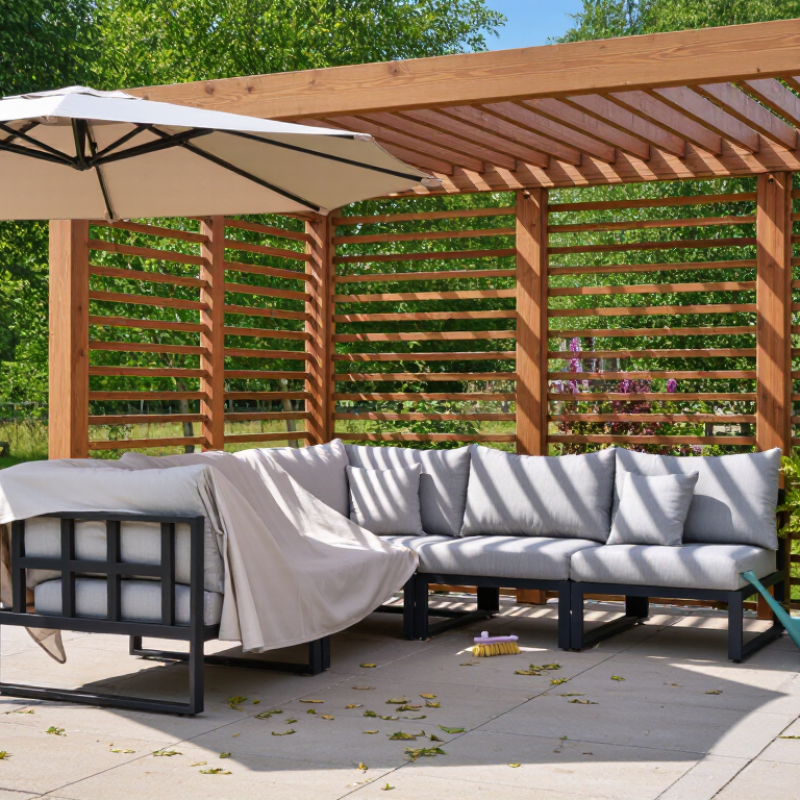
2026 Best Ways to Protect Outdoor Sofas from Rain and Sun?

Assess Your Outdoor Sofa’s Materials, Location, and Weather Exposure

Protecting an outdoor sofa begins with assessing its materials, location, and actual weather exposure. Do not assume every sofa needs the same solution.

I once placed a fabric sofa beneath a covered patio, believing it was protected. Wind-driven rain still soaked the cushions. Sunlight faded one arm faster than the rest. Check whether the frame is wood, metal, or synthetic material. Wood needs breathable protection and regular moisture checks. Metal requires attention around joints, screws, and scratched coatings. Outdoor fabric may resist light rain, but standing water can still cause mildew.

Tips: Track the sofa for one week. Note morning sun, afternoon glare, rain direction, and drying time. A simple photo after rainfall can reveal hidden exposure. Choose a breathable cover that fits without pressing tightly against cushions. Oversized covers can trap moisture and rub against corners.

Location often matters more than the forecast. Sofas near walls may stay damp longer because air circulation is poor. Those under trees can collect sap, leaves, and bird residue. A balcony may block rain but intensify heat against glass or concrete. Raise the sofa slightly if water gathers beneath it. Move removable cushions indoors during prolonged storms. I have found that “weather-resistant” does not mean maintenance-free. Inspect seams, underside fabric, and fasteners every few weeks. Small damage becomes expensive when ignored.

Choose Weather-Resistant Covers and Protective Outdoor Fabrics

Rain and sunlight damage outdoor sofas differently, so one fabric rarely solves everything. The World Health Organization classifies a UV Index of 6–7 as high and 8–10 as very high. Repeated exposure can fade cushions, weaken stitching, and make coatings brittle. Choose solution-dyed acrylic or tightly woven polyester with tested UV resistance. Water-repellent fabric helps, but waterproof fabric alone can trap condensation.

Use a fitted cover with sealed seams, adjustable vents, and soft inner lining. The lining matters. Rough PVC can polish or scratch metal frames after windy nights. Look for performance results tested under ASTM G154 or ISO 4892-3 weathering procedures. These standards expose materials to ultraviolet light, heat, and moisture cycles. However, laboratory hours do not perfectly recreate coastal salt, tree sap, or winter freezing. That limitation deserves attention. A cover rated for rain may still fail at weak corners.

Tips: Let cushions dry fully before covering them. Raise the cover slightly for airflow. Brush off leaves weekly, then clean with mild soap and water. Avoid folding damp fabric. Check seams after storms, especially where water pools. Replace covers when the backing becomes sticky or cracks. In my view, buying the thickest cover is not always wiser; breathable construction often protects the sofa better than sheer weight.

2026 Best Ways to Protect Outdoor Sofas from Rain and Sun? - Choose Weather-Resistant Covers and Protective Outdoor Fabrics
Protective Option Typical Material or Construction Rain Protection Sun and UV Protection Breathability Best Use Care Requirements Important Limitation
Solution-Dyed Acrylic Cover UV-stable acrylic fibers with a water-repellent finish and tightly woven surface High
Suitable for regular rain when seams and openings are well protected
Excellent
Color retention is generally strong in sustained outdoor exposure
Good
Allows some moisture vapor to escape
Patio sofas exposed to strong sunlight and changing weather Brush off debris, clean with mild soap, and dry completely before storage Not usually fully waterproof unless the fabric, seams, and closures are designed as a complete waterproof system
Solution-Dyed Polyester Cover Coated or uncoated polyester fabric with UV-resistant coloring Moderate to High
Performance depends heavily on coating and seam construction
Good
Usually more resistant to fading than ordinary, non-treated polyester
Moderate
Coated versions release less trapped humidity
General-purpose protection and seasonal outdoor storage Remove leaves and dirt regularly; avoid abrasive cleaners and high heat Lower-cost versions may become brittle or fade sooner under intense sunlight
PVC-Coated Polyester Cover Woven polyester base with a polyvinyl chloride coating Very High
Good resistance to driving rain when seams are sealed
Good
Provides a strong physical barrier against sunlight
Low
Can trap condensation if ventilation is inadequate
Heavy rain, temporary storm protection, and covered storage areas Wipe clean and allow both the cover and sofa to dry before covering again May stiffen in cold weather and can encourage mildew if moisture is trapped underneath
Polyester Oxford Fabric Thick basket-weave polyester, commonly used with a water-resistant backing High
Dense weave and backing help shed water
Moderate to Good
UV performance varies by fabric weight and treatment
Moderate Durable fitted covers for everyday patio use Use a soft brush and mild detergent; inspect coating for cracking over time Heavy fabric can retain heat and may require ventilation openings
Breathable Polypropylene Cover Lightweight nonwoven or woven polypropylene designed to reduce moisture buildup Moderate
Repels light rain but may not withstand prolonged downpours
Moderate
UV resistance depends on stabilizers and fabric density
Very Good
Helps reduce condensation during covered storage
Short-term protection in dry or moderately wet climates Shake off dust, spot-clean gently, and avoid folding while damp Usually less resistant to abrasion and severe weather than heavier coated fabrics
Outdoor Olefin Upholstery Fabric Solution-dyed olefin yarn used for cushions and removable protective panels Moderate
Water resistance improves with a suitable top finish
Excellent
Low moisture absorption helps reduce fading and drying time
Good Cushion covers and sofa upholstery that remain outdoors Clean spills quickly, wash according to the fabric label, and dry cushions vertically Upholstery fabric alone is not a substitute for a fitted rain cover during storms
Sunbrella-Style Acrylic Outdoor Fabric Solution-dyed acrylic construction with a tightly woven outdoor finish High
Strong water repellency when the finish is maintained
Excellent
Designed for long-term outdoor color stability
Good Premium cushions, curtains, and protective outdoor textile panels Clean with mild soap and water; refresh the water-repellent finish when needed Fabric can still absorb water through seams, zippers, and stitching during prolonged rain
Ventilated Fitted Sofa Cover Weather-resistant fabric with adjustable hems, air vents, handles, and fasteners High
Fitted construction reduces wind-driven water entry
Good to Excellent
Depends on the outer fabric and UV treatment
Good
Vents help release heat and humidity
Year-round protection for complete outdoor sofas Remove and dry periodically; check vents, buckles, and seams for wear An incorrect size can allow wind, rain, and dust to enter despite high-quality fabric
Practical protection routine: Use a breathable, well-fitted cover during rain; keep the sofa slightly elevated from standing water; position it away from direct afternoon sun when possible; clean dirt before it becomes embedded; and uncover the sofa periodically so trapped humidity can escape.

Add Shade, Waterproofing, and Proper Drainage for Daily Protection

Protecting an outdoor sofa from rain and sun requires more than a fitted cover. Shade reduces ultraviolet exposure, while waterproofing limits moisture entering cushions and seams. The WHO and WMO Global Solar UV Index recommends protection when UV levels reach 3 or higher. A pergola, retractable canopy, or dense outdoor umbrella helps during peak afternoon sunlight.

Choose breathable, water-resistant covers rather than fully sealed plastic sheets. Trapped condensation can create a damp interior. The U.S. Environmental Protection Agency advises drying wet materials within 24 to 48 hours to reduce mold growth. I check cushions after heavy rain, even when the cover looks dry. That small habit is easy to forget.

Drainage matters every day. Place the sofa on a slightly raised, stable surface, and keep its feet clear of standing water. Angle cushions so rain runs away from their seams. Leave several centimeters between the sofa and walls to improve airflow. Clean blocked deck drains before storm season. A cover alone is not a system.

Waterproofing sprays can improve resistance, but they are not permanent. Follow the fabric manufacturer’s care guidance and test a hidden area first. The American Society for Testing and Materials uses standardized water-resistance testing, yet laboratory results cannot predict every balcony, garden, or coastal climate. Real conditions are messier. Inspect stitching, zippers, and foam monthly, then allow cushions to dry completely before storage.

2026 Best Ways to Protect Outdoor Sofas from Rain and Sun

Add shade, waterproofing, and proper drainage for daily protection.

The chart uses the internationally recognized UV Index categories used by the World Health Organization and weather services. Start using shade and UV-resistant covers when the index reaches 3 or higher. After rain, use waterproof cushions or covers, keep drainage paths clear, and remove standing water promptly to reduce moisture damage and mildew risk.

Clean, Dry, and Store Cushions to Prevent Mold and Sun Damage

Outdoor sofas need more than a waterproof cover. Their cushions can hold moisture beneath the surface, especially after night rain. I check seams, zippers, and the cushion undersides before storing anything. A clean, dry cushion resists mold and unpleasant odors far better.

Brush off leaves and loose dirt before washing the fabric. Use mild soap, cool water, and a soft brush for visible stains. Rinse thoroughly, because soap residue can attract more dust. Let each cushion dry upright in moving air, not directly on a hot surface. This may take a full day. Do not stack damp cushions, even when they feel dry outside. I once made that mistake, and the hidden center smelled musty within a week.

Sun damage needs steady prevention. Rotate cushions every few weeks so one side does not fade faster. Keep them in shade during the strongest afternoon light when possible. A breathable storage bench or ventilated cabinet is safer than a sealed plastic box. Before storing cushions for several days, inspect them for moisture, insects, and small tears. Repairing a loose seam early can prevent water from reaching the filling. I am still refining my routine; quick storage often seems convenient, but it can trap the very dampness I am trying to remove.

Inspect and Maintain Every Protective Layer Through the Seasons

Rain and sunlight rarely damage an outdoor sofa in one dramatic moment. They weaken every protective layer slowly.

Inspect the cover after each heavy storm. Look for pooled water, cracked seams, faded fabric, and damp foam. A fingertip test helps: press cushions in the center and near their edges. If moisture remains after several hours of airflow, remove the covers and dry each piece separately. Do not trust a surface that feels dry. Foam holds water.

Follow the care label when cleaning protective fabric. Use a soft brush first, because fine grit acts like sandpaper when cushions move. Rinse cleaner completely; residue can attract dirt and stiffen fibers. Test water resistance with a few drops. The drops should bead briefly, not disappear immediately. Reapply a suitable fabric treatment only after the material is clean and dry. Test a hidden area first. I once treated a damp cushion too quickly, and the finish became uneven. It needed repeating.

Inspect the frame and hardware during the same check. Tighten loose fasteners, clear leaves from drainage gaps, and examine wood for swelling or splits. Metal joints need attention after salty air or repeated wet weather. Use breathable covers, leaving space for airflow. A sealed cover can block rain but trap condensation overnight. Move cushions indoors during long wet periods, even when the forecast seems mild. Seasonal notes may reveal one corner fading faster or staying damp. Look closer.

FAQS

How can I protect an outdoor sofa from strong sunlight?

Add shade during peak afternoon sunlight. A pergola, canopy, or dense umbrella can reduce ultraviolet exposure. Shade helps. Consider extra protection when UV levels reach 3 or higher.

What type of sofa cover works best in rainy weather?

Choose a breathable, water-resistant cover instead of sealed plastic. Sealed covers can trap condensation inside. Leave airflow around the sofa whenever possible. Covers are not enough.

How should I improve drainage around an outdoor sofa?

Place the sofa on a stable, slightly raised surface. Keep its feet away from standing water. Angle cushions so rain moves away from seams. Clear nearby deck drains before stormy periods.

How quickly should wet cushions dry?

Dry wet cushions within 24 to 48 hours when possible. Stand them upright in moving air. Do not stack damp cushions. The hidden center may stay wet, even when the outside feels dry.

How should I clean outdoor sofa cushions?

Brush away leaves and loose dirt before washing. Use mild soap, cool water, and a soft brush. Rinse thoroughly to remove residue. Let each cushion dry completely.

Can waterproofing spray permanently protect sofa fabric?

No, waterproofing spray usually provides temporary resistance. Follow the fabric care instructions and test a hidden spot first. Laboratory results cannot predict every balcony, garden, or coastal condition. Real weather varies.

How can I reduce fading and uneven sun damage?

Rotate cushions every few weeks. Keep them shaded during the strongest afternoon light. Avoid placing them against hot surfaces. This routine is easy to forget.

What should I inspect before storing cushions?

Check seams, zippers, undersides, insects, moisture, and small tears. Repair loose stitching early. Store cushions in a breathable bench or ventilated cabinet, not a sealed plastic box. I still sometimes store them too quickly.

Conclusion

How to protect outdoor sofas from rain and sun? Start by assessing the sofa’s materials, placement, and exposure to changing weather. Move it away from areas where rain collects, and choose breathable, water-resistant covers made from durable outdoor fabrics that can withstand moisture and sunlight. Add shade with an umbrella, canopy, or other suitable shelter, and use fabric protectors when appropriate. Make sure the sofa stands on a surface with good drainage so water does not remain underneath or inside the cushions.

For daily care, clean dust, spills, and stains promptly, then allow every cushion and cover to dry completely before storing or covering them. Keep cushions in a dry, ventilated space during heavy rain or long periods of non-use to reduce mold and mildew. Throughout the seasons, inspect covers, seams, cushions, frames, and drainage areas for wear or trapped moisture. Reapply suitable waterproofing treatments and replace damaged protective layers to maintain comfort, appearance, and long-term outdoor durability.

Charlotte

Charlotte

Charlotte is a seasoned marketing professional with a deep understanding of the company's portfolio and a passion for elevating its presence in the market. With a keen eye for detail and a commitment to excellence, she ensures that our professional blog is regularly updated with insightful articles......