When should I replace my sofa cushions? The honest answer is not always tied to a calendar. A well-used sofa may need new cushions after five years, while a lightly used one can remain comfortable for ten years or longer. Daily sitting, children, pets, sunlight, and cushion materials all change that timeline.
Upholstery specialist John Jordan explains, “A cushion should support you, not make you search for comfort.” That simple test matters. Sit in your usual spot for ten minutes. Notice whether your hips sink toward the frame, your back loses support, or the cushion stays visibly flattened after standing. These are practical warning signs.
Look closely.
Wrinkled fabric alone does not prove replacement is necessary. Foam can sometimes be replaced while the cover remains usable. Feather and fiber fillings may only need refilling or careful reshaping. However, cracked foam, persistent lumps, broken zippers, and a sagging seat deck suggest a larger repair. A musty smell or moisture damage deserves prompt attention, especially in homes with allergies.
There is no perfect replacement schedule. I have seen cushions that looked tired but recovered beautifully after professional restuffing. I have also seen attractive cushions hiding collapsed foam underneath. That is why appearance should not be the only measure.
This guide will explain how to inspect cushion support, compare foam and fiber options, estimate replacement costs, and decide whether repair makes more sense. Your sofa should feel steady, not merely look presentable. Sometimes, replacement is overdue. Sometimes, a thoughtful repair is enough.
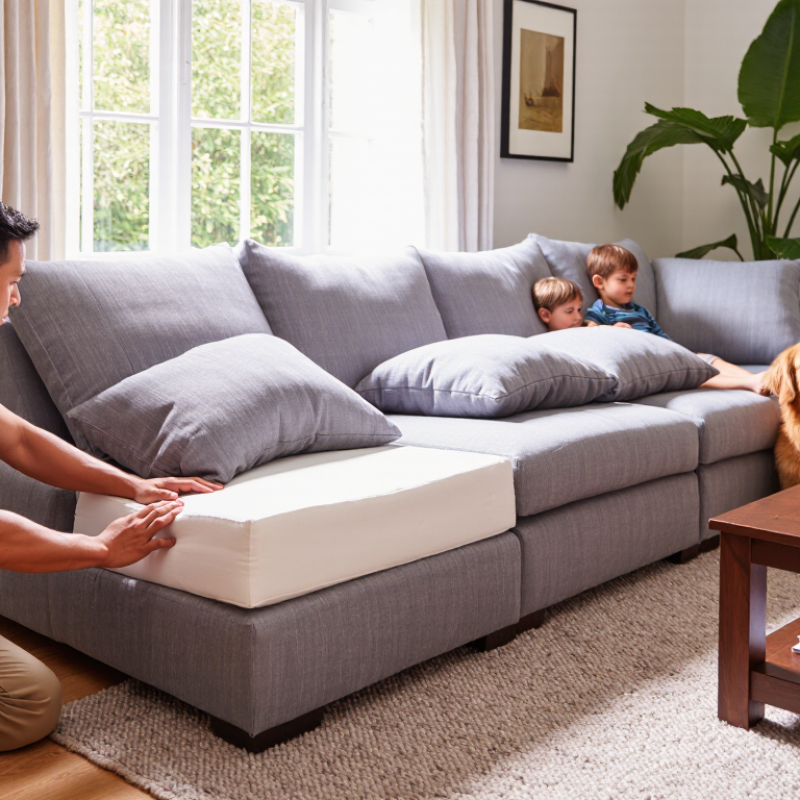
How Often Should You Replace Sofa Cushions?
Cushion life depends more on use and construction than on age alone. A sofa used every evening will usually soften faster than one in a formal room. Foam density, filling type, cushion thickness, and upholstery also affect how well cushions hold their shape. Pets, children, and direct sunlight can add wear. Not just age.
Notice what happens when you sit down. If a cushion stays flattened, feels lumpy, or no longer supports your hips, its filling may be worn out. Check whether it springs back after you stand. Feel the difference. A sagging seat can also come from stretched webbing or a weakened frame, so replacing cushions may not solve the problem. It is easy to blame the foam too quickly.
Care can extend cushion life. Rotate and flip cushions when their design allows, and follow the upholstery care instructions. Removable covers make cleaning easier, but they do not restore tired filling. If only one seat is worn, compare its shape and firmness with the others before ordering a replacement. Measurements matter, and a small sizing mistake can leave gaps or tight, wrinkled covers. There is no perfect replacement schedule; condition and comfort are better guides.
| Factor | Typical Effect on Replacement Timing | Signs to Check | Practical Guidance |
|---|---|---|---|
| Daily use | Frequent, extended use usually wears cushions faster than occasional use. | Persistent sagging, flattened areas, or reduced support in favorite seats. | Inspect cushions regularly. With heavy daily use, consider replacement as soon as comfort or support declines, rather than relying on a fixed age. |
| Foam condition and quality | Foam can last for several years, but its lifespan varies with density, quality, use, and care. | Foam stays compressed after use, feels lumpy, or no longer supports the body evenly. | Replace the foam insert when it has permanently lost its shape or support. A washable or reusable cover may not need replacing at the same time. |
| Fiber or loose-fill condition | Loose fills can flatten or shift and may need more frequent fluffing or topping up than resilient foam. | Uneven fill, thin spots, clumping, or cushions that do not regain volume after fluffing. | Try redistributing or replenishing the fill first if the cover and cushion structure remain sound; replace the insert if it no longer holds its shape. |
| Weight and seating patterns | Higher loads and repeatedly sitting in the same spot can concentrate wear in particular cushions. | One seat feels noticeably lower or softer than the others. | Rotate interchangeable cushions periodically to spread wear. Replace individual inserts when their support differs significantly from the rest. |
| Pets, children, and spills | Scratches, stains, moisture, and frequent cleaning can shorten the useful life of cushion covers and fills. | Persistent odors, damaged seams, stubborn stains, or dampness inside the cushion. | Clean according to the care label and allow cushions to dry fully. Replace affected covers or inserts if damage, odor, or contamination cannot be remedied. |
| Sunlight and room conditions | Strong, prolonged sunlight can fade or weaken some upholstery fabrics; moisture can damage materials and encourage odors. | Fading, brittle fabric, mildew-like odor, or signs of moisture damage. | Reduce direct sun exposure and keep cushions dry. Replace the cover or cushion components when damage affects appearance, hygiene, or function. |
| Personal comfort and support needs | A cushion may need replacing sooner if it no longer provides comfortable, even support. | Discomfort while sitting, bottoming out, or difficulty getting comfortable despite adjusting the cushion. | Use comfort and support as the main guide. Choose replacement fill with a firmness and construction suited to the sofa and the people using it. |
| Overall condition | There is no universal replacement interval; well-maintained cushions can last longer, while heavily used cushions may wear out sooner. | Several issues at once, such as permanent sagging, broken seams, damaged fill, or persistent odor. | Replace the insert, cover, or complete cushion according to what has failed. Check the sofa frame and cushion dimensions before ordering replacements. |
Note: These are general maintenance guidelines, not a guaranteed lifespan. Actual replacement timing depends on cushion materials, construction, use, care, and comfort.
Cushion life depends on use, filling, foam density, thickness, upholstery, and care. A sofa used every evening may soften faster than one in a quiet guest room.
Look for lasting flattening, lumpy filling, or weak support under your hips. If it does not spring back after you stand, its filling may be worn.
They commonly last about five to ten years. Higher-density foam often keeps its shape longer, especially when cushions are rotated regularly.
With daily use, they may flatten within one to three years. That is only a rough range, not a strict deadline.
They often need frequent fluffing to keep the filling evenly spread. Otherwise, it can gather in lumpy corners.
No. Removable covers can make cleaning easier, but they do not restore worn filling.
Yes. Stretched webbing or a weakened frame can also cause sagging, so new filling may not fix the problem. Worth checking.
Compare the worn seat’s shape and firmness with the others, then measure carefully. A small sizing error can cause gaps or tight, wrinkled covers.
Knowing when to replace sofa cushions depends on their material, construction, frequency of use, and level of care. Foam cushions may lose firmness sooner in heavily used seating, while high-quality fiber, feather, or combination fillings can last longer when regularly fluffed and rotated. Exposure to sunlight, moisture, spills, pets, and uneven sitting can also shorten their useful life. When should I replace my sofa cushions? Consider replacement when they remain flattened after fluffing, feel lumpy or uneven, no longer provide adequate support, produce persistent odors, or show damaged covers and exposed filling.
Proper maintenance can extend cushion longevity through regular rotation, vacuuming, spot cleaning, and protection from excessive heat or humidity. When selecting replacement cushions, match their dimensions, thickness, firmness, filling type, and cover style to the sofa frame and your comfort preferences. Choosing cushions with suitable support and durable, easy-care fabric can restore the sofa’s appearance and improve everyday comfort.

 Govind Sofa