How to Effectively Remove Wine Stains from Leather Sofa?

Time:2026-05-11 Author:Isabella
0%

Wine stains on leather sofas can be a nightmare for homeowners. You enjoy a glass of wine, and suddenly, a spill occurs. The thought of permanent damage can be distressing. This situation leads many to ask, "How to remove wine stains from a leather sofa?"

Addressing this issue requires knowledge and the right techniques. Leather is delicate, and improper care can exacerbate the problem. It's essential to act quickly to prevent the stain from setting. There is both a science and an art to stain removal. With the right approach, you can restore your sofa's elegance.

Every leather piece has its unique characteristics. This means different methods may apply. Being mindful of the sofa's finish is crucial. Not all leather is created equal; some may react poorly to certain cleaners. Thus, a careful and informed approach will yield the best results. In the next sections, we will explore effective methods to tackle this dilemma.
How to Effectively Remove Wine Stains from Leather Sofa?

Understanding the Composition of Leather and Its Stain Resistance

Understanding the composition of leather is key to effectively managing stains, such as red wine. Leather is made from animal hides, primarily collagen fibers, which contribute to its durability but also affect its stain resistance. Oily and waxy finishes can repel some stains, but wine can still penetrate, especially if treated improperly. A 2022 study by the International Leather Research Institute indicates that over 30% of leather furniture users experience stain issues, with wine being a leading culprit.

To minimize damage, act quickly when spills occur. Blot the stain gently with a clean cloth, rather than rubbing. This can prevent the liquid from soaking deeper into the leather. Experts recommend using a specialized leather cleaner that matches your specific type, as harsh chemicals may worsen the stain. Regular conditioning can also enhance the leather's resistance to future stains.

TIP: Always test new cleaning products in an inconspicuous area first. This helps ensure compatibility without causing additional problems. Another tip is to consider application techniques carefully, such as using a soft brush for light stains. Remember, while leather can be beautifully resilient, its maintenance requires patience and attention to detail.

Immediate Actions to Take When Wine Spills on Leather Sofa

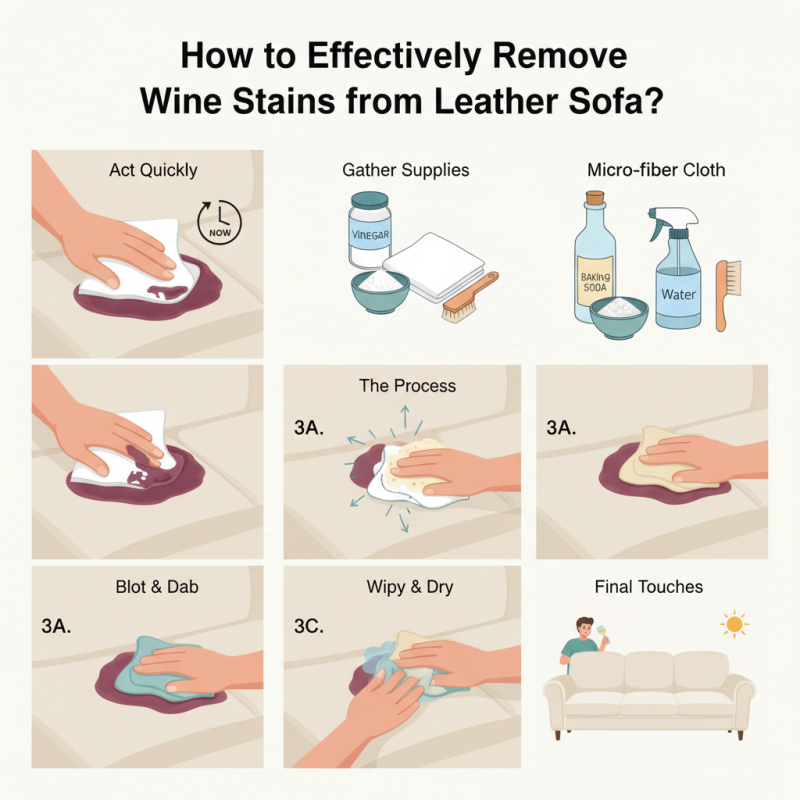
When you spill wine on a leather sofa, quick action is critical. Start by blotting the stain with a clean, dry cloth. Do not rub it. Rubbing can push the wine deeper into the leather. Instead, use a gentle touch. Press the cloth onto the stain to absorb as much wine as possible. Time is of the essence, as letting the stain sit may cause more damage.

After blotting, mix equal parts of white vinegar and water. Dampen another clean cloth with this solution. Lightly dab the stained area. Test it on a small, inconspicuous spot first. This ensures the vinegar won't harm the leather. Repeat the process, making sure to use a dry cloth afterward to absorb excess moisture. Remember, leather requires gentle care, and over-saturating it can lead to further issues.

Consider applying a leather conditioner after the cleaning process. This helps restore moisture and luster to the leather. Be cautious, though—too much conditioner can make it look greasy. It’s essential to monitor the sofa for any changes after cleaning. Learning how your specific leather reacts to different products is crucial for long-term care.

Effectiveness of Wine Stain Removal Techniques on Leather Sofas

Effective Home Remedies for Removing Wine Stains from Leather

Wine stains on leather sofas can be daunting. Thankfully, effective home remedies do exist. A recent survey revealed that nearly 40% of consumers experience spills at home. Considering that wine stains can set quickly, prompt action is crucial.

One effective method is using a mixture of white vinegar and water. Combine equal parts of both in a bowl. Dab a clean, soft cloth into this solution. Gently blot the stain, avoiding vigorous rubbing. The acetic acid in vinegar helps neutralize the wine pigments. It’s important to test this solution on a less visible area first. This helps ensure it doesn't alter the leather's color.

Another option is baking soda. Sprinkle a generous amount directly onto the stain. Let it sit for a few hours to absorb the wine. Vacuum the area afterward. The effectiveness of baking soda is backed by studies showing that it can lift stains effectively. However, results might vary based on the leather quality. Remember, patience is key, as deeper stains may require multiple treatments.

Commercial Products Designed for Leather Stain Removal

When dealing with wine stains on leather sofas, selecting the right commercial products is crucial. Many specialized stain removers are crafted for leather. They often contain gentle ingredients that lift stains without damage. Look for products that specify their suitability for leather fabrics.

Before using any product, always test it on a hidden section of the sofa. Apply a small amount to observe how the leather reacts. This step is often overlooked but essential. An unsuitable product can worsen the stain or harm the material.

Tips for effective stain removal include blotting the stain immediately with a clean cloth. Avoid rubbing; this can spread the stain. Once you've applied the commercial cleaner, gently wipe the area. Allow it to dry naturally, without direct heat. Waiting can be hard, but rushing often leads to disappointment. Reflect on your approach and adjust if necessary—treating leather requires patience and care.

Preventative Measures to Protect Leather Sofa from Future Stains

To protect your leather sofa from future wine stains, regular maintenance is crucial. Start by applying a high-quality leather protector. This helps create a barrier against spills. Take the time to read instructions carefully before applying. Remember, not all protectors are alike. Test any product on a hidden area first.

Make it a habit to clean your leather sofa weekly. Use a soft, dry cloth to remove dust and dirt. Avoid using too much water, as excess moisture can damage the leather. For a deeper clean, use a specialized leather cleaner. Keep in mind that over-cleaning might strip essential oils from the leather.

In addition, consider setting some ground rules for your living space. Designate specific areas for drinking. Avoid placing drinks directly on the sofa. Encourage guests to use coasters. These simple changes can go a long way in preventing spills. Reflect on your habits and maintain an awareness of your environment. Protective measures today can save you from headaches later.

How to Effectively Remove Wine Stains from Leather Sofa? - Preventative Measures to Protect Leather Sofa from Future Stains

Method Description Effectiveness Preventative Measure
Baking Soda Sprinkle baking soda on the stain and let it absorb for 30 minutes. Good Apply a leather protector regularly.
White Vinegar Mix equal parts of vinegar and water, apply to a cloth, and blot the stain. Very Effective Keep red wine away from the sofa.
Leather Cleaner Use a commercial leather cleaner suitable for wine stains. Highly Effective Clean the sofa regularly with a soft cloth.
Cornstarch Sprinkle cornstarch on the stain and leave for a few hours to absorb moisture. Moderate Use coasters for drinks on the sofa.
Club Soda Blot the stain with club soda and a clean cloth. Good Apply a protective conditioner every 6-12 months.

FAQS

: What is the main component of leather?

: Leather is primarily made from collagen fibers found in animal hides.

How can I minimize damage from a wine spill on leather?

Act quickly by blotting the stain gently with a clean cloth. Avoid rubbing the area.

Are there specific cleaners for leather?

Yes, use a specialized leather cleaner matching your leather type. Harsh chemicals can worsen stains.

What home remedy can I use for wine stains on leather?

A mixture of equal parts white vinegar and water can help. Test it on an inconspicuous area first.

How does baking soda help with stains?

Baking soda can absorb wine stains effectively. Sprinkle it on the stain and let it sit for a few hours.

How important is regular conditioning for leather?

Regular conditioning enhances stain resistance and maintains the leather's beauty. It requires patience and attention.

Why is testing cleaning products essential?

Testing ensures compatibility with leather and prevents potential color alteration or damage.

How long might it take to remove deeper stains?

Deeper stains may require multiple treatments. Results can vary based on leather quality and stain severity.

Can all wines stain leather?

Yes, most wines can stain leather, especially if not treated promptly and properly.

What should I do if the first treatment doesn't work?

Don’t panic. Wait and consider trying another method or repeating the treatment. Patience is key.

Conclusion

If you're wondering "How to remove wine stains from a leather sofa?" it's essential to understand the unique composition of leather and its inherent stain resistance. When a wine spill occurs, immediate actions are crucial to minimize damage. Blotting the stain promptly and avoiding rubbing are key steps. For effective home remedies, using mild solutions like soap and water or a mixture of vinegar and olive oil can help lift the stain. Additionally, there are various commercial products available that are specifically formulated for leather stain removal.

To protect your leather sofa from future stains, consider preventative measures such as applying a leather protector or ensuring quick cleanup of any spills. Maintaining the leather with regular conditioning can also enhance its stain resistance. By following these steps, you can keep your leather sofa looking pristine and free from the aftermath of wine spills.

Isabella

Isabella

Isabella is a dedicated marketing professional with a sharp focus on driving brand growth and engagement through strategic content creation. With an extensive background in digital marketing, she combines her passion for storytelling with her keen understanding of industry trends to deliver......