7 Best Modular Sofas What Are They and How Do They Work?

Time:2026-10-10 Author:Ethan
0%

Modular sofas are reshaping how people furnish changing homes, apartments, and open-plan rooms. But what is a modular sofa and how does it work? It is a seating system built from separate sections, such as corner units, armless seats, chaises, and ottomans. These pieces connect through clips, brackets, or concealed hardware. Owners can rearrange them without replacing the entire sofa.

That flexibility responds to a real market shift. Grand View Research’s modular furniture market analysis identifies customization, space efficiency, and adaptable layouts as important growth drivers. The report also links demand to smaller urban homes and changing household needs. IMARC Group’s modular furniture market report similarly highlights personalization and multifunctional design. These findings support the appeal of modular seating, but they do not guarantee every model will perform equally well.

A practical review must examine more than appearance. We will assess frame construction, cushion density, connector strength, fabric performance, delivery size, and warranty coverage. We will also consider how each sofa behaves on a Tuesday evening, when a chaise may block a doorway or a loose section slowly drifts across the floor. Small details matter.

No ranking is perfect.

Our selection of the seven best modular sofas combines reported specifications, product testing principles, user-focused experience, and credible industry research. Still, comfort remains personal, and manufacturers may update materials or configurations. A sofa that suits a spacious family room may feel oversized in a compact studio. That uncertainty deserves attention, not marketing language.
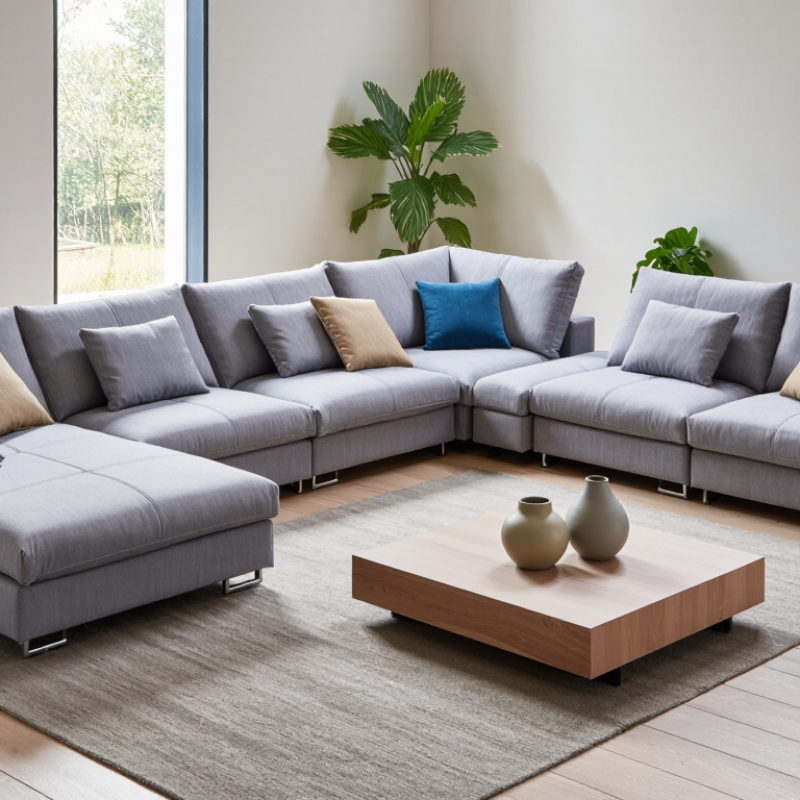
7 Best Modular Sofas What Are They and How Do They Work?

Modular Sofa Basics: Components, Layouts, and Key Industry Terminology

Modular Sofa Basics: Components, Layouts, and Key Industry Terminology

A modular sofa is built from separate seating units rather than one fixed frame. Common components include armless chairs, corner units, ottomans, chaise sections, and end pieces. Each module usually connects with metal brackets, clips, or concealed linking hardware. This system allows homeowners to change the shape without replacing the entire sofa. Measure twice. Doorways still matter.

Industry terms can make shopping confusing. “LAF” means left-arm-facing, while “RAF” means right-arm-facing, based on the person viewing the sofa. A chaise extends the seat for lounging, and a corner unit creates an L-shaped turn. “Seat depth” describes the distance from the front edge to the back cushion. Deeper seats feel relaxed, but they may provide less upright support.

Layouts can include an L-shape, U-shape, straight row, or floating pit arrangement. A floating layout sits away from walls, so finished upholstery on every side becomes important. Check the connector position, cushion firmness, fabric cleaning code, and replacement-part policy before ordering. In my experience, flexible layouts are useful, but they can encourage overbuying. One extra ottoman may look practical in a showroom and awkward in a small living room. That detail matters. Test the seat height with your feet flat on the floor, especially when different family members will use it.

Modular Sofa Basics: Components, Layouts, and Key Industry Terminology

Modular sofas are built from separate units that can be combined and rearranged. The chart shows typical seating capacities for common modular layouts. Actual capacity depends on module width, armrests, corner units, and available floor space.

Common terms include armless chair, corner unit, ottoman, chaise, and connector. These components allow users to create straight, L-shaped, U-shaped, or sectional arrangements.

How Modular Sofas Work: Connectors, Frames, Cushions, and Reconfiguration

A modular sofa is built from separate sections that work as one seating system. Unlike a fixed couch, it can change shape when your room or routine changes. The hidden system matters as much as the fabric. Connectors hold neighboring units together, preventing gaps when someone sits down or stretches out. Common designs use clips, brackets, or locking plates beneath the seat. Check how they release before buying. A connector that feels secure may still be frustrating to remove.

The frame supports the entire structure. Hardwood, reinforced plywood, and metal can all perform well when properly joined. Look for even edges, firm joints, and legs that do not wobble on a hard floor. Cushions then control comfort. High-density foam usually feels supportive, while softer fillings create a deeper, relaxed seat. Some cushions reverse, which helps distribute wear. However, reversible does not always mean equally comfortable on both sides. That detail deserves a closer inspection.

Reconfiguration usually involves lifting one section, unlocking its connector, and placing it in a new position. A corner piece can become an end seat, depending on the design. Measure doorways and walking paths before moving anything. Large sections are awkward, even when they are technically lightweight. I have found that a flexible layout can improve a small living room, but frequent rearranging may loosen connectors over time. Check them every few months, especially after moving the sofa across thick rugs.

7 Best Modular Sofas: What Are They and How Do They Work? — How Modular Sofas Work: Connectors, Frames, Cushions, and Reconfiguration

Modular Sofa Type Typical Modules Approximate Footprint Connector System Common Frame Construction Cushion Construction Reconfiguration Options Best For
Three-Piece Straight Sofa 3 single-seat or two-seat modules Approximately 78–96 in wide × 36–40 in deep Metal alligator clips or interlocking brackets mounted beneath adjacent modules Kiln-dried hardwood or engineered-wood frame with reinforced corner blocks High-resilience foam, often wrapped in polyester fiber for a softer surface Can remain as one sofa or separate into individual lounge chairs; modules may be rearranged end-to-end Small living rooms, apartments, and flexible seating areas
L-Shaped Sectional Three seats plus one chaise or corner module Approximately 95–125 in wide × 60–85 in deep Under-seat clips, hook-and-loop stabilizers, or steel joining plates Wood or engineered-wood platform with a webbing or spring-supported seat base Medium- to high-density foam with fiber, feather, or down-alternative wrapping Chaise can sometimes move from left to right; separate modules can create a compact sofa and ottoman arrangement Everyday lounging, open-plan rooms, and homes needing a chaise
U-Shaped Conversation Sectional Five to seven modules, including two corner units Approximately 120–170 in wide × 90–120 in deep Multiple metal connectors positioned between each module to prevent shifting Reinforced hardwood or plywood frame designed to distribute loads across connected units Foam or pocket-coil seat cores with fiber-filled back cushions Can be divided into two sofas, a large corner arrangement, or separate seating groups when the modules are independently finished Large rooms, families, and face-to-face conversation areas
Pit-Style Modular Sofa Four to eight deep seat modules with corner pieces and ottomans Approximately 110–170 in wide × 90–140 in deep Low-profile clips or brackets keep the deep modules aligned without changing the lounge-like layout Strong wood or engineered-wood frame with a substantial deck and reinforced seat rails Deep foam seats, loose fiber-filled backs, or a foam-and-down-alternative blend Modules can form a large pit, separate sofas, a sectional, or an oversized daybed-style arrangement Casual lounging, movie rooms, game rooms, and large households
Chaise-Plus-Ottoman Configuration Two or three sofa modules, one chaise, and one movable ottoman Approximately 85–115 in wide × 55–85 in deep Clips connect the fixed seating; the ottoman normally remains unattached for easier movement Wood or plywood frame with a reinforced base beneath the chaise and sofa seats Foam seat cushions with fiber-wrapped or fiber-filled back cushions Ottoman can extend the chaise, act as a coffee table with a tray, or serve as independent seating Rooms that need adaptable leg support without a permanent large sectional
Armless Modular Lounge Two to six armless seats, with optional corner and ottoman modules Approximately 60–150 in wide × 34–42 in deep Concealed clips or metal brackets attach modules along their side and bottom rails Compact engineered-wood or hardwood frame with a supported seat deck Medium-firm foam or foam wrapped in polyester fiber for a streamlined profile Can expand horizontally, form a corner sofa, or split into individual armless chairs Minimalist interiors, narrow spaces, and layouts that may change frequently
Reversible Corner Modular Sofa Two or three seats, one reversible corner module, and an optional chaise Approximately 90–125 in wide × 60–85 in deep Removable alligator clips or brackets allow the corner and seat modules to be detached for repositioning Hardwood, plywood, or mixed engineered-wood frame with reinforced corner joints High-resilience foam seats with fiber or down-alternative back cushions Can switch between left-facing and right-facing layouts; may also operate as a straight sofa with the chaise separated Renters, frequently rearranged rooms, and spaces with changing traffic patterns

Seven Best Modular Sofa Styles: Seat Depth, Price, and Layout Flexibility

Modular sofas work through separate seats, backs, and connectors that can be rearranged. Their value depends on seat depth, price, and layout flexibility. A compact two-piece sofa usually offers a 22–24-inch seat depth and costs about $900–$1,800. It suits apartments and narrow living rooms. A chaise sectional gives one extended seat, often 24–27 inches deep. Expect roughly $1,200–$2,500, depending on fabric and frame quality. Comfortable, but less adaptable.

An L-shaped modular sofa uses corners efficiently. Its 25–28-inch depth supports relaxed sitting without overwhelming most rooms. Prices often range from $1,800–$4,000. A U-shaped design creates generous conversation space, though it needs a wide room and a larger budget. Many cost $2,500–$5,500. The pit-style sofa has deep, low seating, commonly 28–30 inches. It feels casual and inviting. However, standing up can be awkward for some users.

Armless modules create the greatest layout freedom. They can form rows, corners, or separate chairs, with typical prices near $1,500–$3,500. An expandable sofa adds or removes sections as a household changes. It may cost $2,000–$4,500 and requires sturdy connectors. Check the frame, cushion recovery, and doorway measurements before ordering. I once underestimated a stairwell and regretted it. Seat depth also needs testing with your feet flat on the floor. Flexible does not always mean practical.

Quality Benchmarks: 50,000 Double Rubs, 1.8-lb Foam, and Frame Warranties

7 Best Modular Sofas: What Are They and How Do They Work?

Modular sofas use separate seats, backs, and arms that connect into one flexible arrangement. You can build an L-shape, straighten the pieces, or separate them for guests. Before choosing one, check the connectors. They should feel firm, align cleanly, and stay quiet when someone shifts position. That matters.

Fabric durability deserves careful attention. A rating of 50,000 double rubs suggests strong resistance for busy homes, but it is not a lifetime promise. Testing conditions differ, and pets, rough clothing, and sunlight can still damage upholstery. Run your hand across the fabric. Look for tight weaving, even seams, and covers that remove without a struggle. A soft fabric may feel better, yet require more maintenance.

Cushion foam is another useful benchmark. Around 1.8-pound foam density can provide dependable residential support, especially with good suspension underneath. It should recover after sitting, rather than forming a permanent hollow. Still, density alone does not reveal comfort. A firm cushion may suit one person and disappoint another. Sit for at least ten minutes.

Inspect the frame where possible. Kiln-dried hardwood or reinforced engineered wood can offer stability, while weak joints may loosen over time. A meaningful frame warranty should explain coverage length, labor terms, and exclusions in plain language. Do not assume “lifetime” covers every failure. Read the details. My own evaluation would include moving each module repeatedly, because a sofa can look excellent and still feel awkward in daily use.

Buying Guide: Room Fit, TB117-2013 Safety, Care, Delivery, and Warranty Data

A modular sofa uses separate sections that connect into different layouts. The best choice depends on your room, not a showroom photograph. Measure wall width, doorway height, stair turns, and elevator space. Leave about 30 inches for comfortable walking paths. Mark each module’s footprint with painter’s tape. This reveals awkward corners quickly. I still recommend checking the taped layout for one full day. Furniture can feel larger after the excitement fades.

Ask for written TB117-2013 compliance information when buying in the United States. This standard concerns the smolder resistance of upholstered furniture. It does not make a sofa fireproof. Check the permanent label and request details about foam, fabric, and testing. Requirements may differ elsewhere, so confirm local rules. Safety paperwork should be clear, not vague.

Care instructions should match your household. Vacuum seams weekly, blot spills immediately, and avoid aggressive cleaners. Removable covers are not automatically machine washable. Confirm cleaning codes before purchasing. During delivery, inspect every carton, connector, leg, and cushion before signing. Photograph damage and keep the packaging until the issue is resolved. Read the warranty carefully. Frame coverage may last longer than fabric, foam, or labor coverage. Ask whether moving damage, stains, normal wear, and loose stitching are excluded. One weakness in my own checklist is forgetting connector access after rearranging modules. Design for maintenance, not only appearance.

FAQS

What makes a modular sofa different from a fixed couch?

A modular sofa uses separate sections that connect into one seating system. You can change its shape when your room or routine changes. The flexibility is useful. However, every section needs enough floor space and clear walking paths.

How do sofa connectors keep the sections together?

Connectors sit beneath the seats and may use clips, brackets, or locking plates. They reduce gaps when people sit, stretch, or move. Check how they release before buying. A secure connector can still be frustrating to remove.

What should I inspect in the sofa frame?

Look for hardwood, reinforced plywood, or properly joined metal. Check even edges and firm joints. Place the sofa on a hard floor. Wobbly legs signal a possible problem.

How do cushion materials affect comfort?

High-density foam usually feels supportive and stable. Softer fillings create a deeper, more relaxed seat. Reversible cushions can spread wear between surfaces. Reversible does not always mean equally comfortable on both sides.

How can I rearrange modular sofa sections safely?

Lift one section, unlock its connector, and place it carefully. A corner section may become an end seat, depending on the design. Measure doorways and walking paths first. Large sections remain awkward, even when lightweight.

How much room should I leave around a modular sofa?

Leave about 30 inches for comfortable walking paths. Measure walls, doorways, stair turns, and elevator space. Mark each module with painter’s tape. Live with the taped layout for one day. Furniture can feel larger later.

What safety information should I request?

In the United States, request written TB117-2013 compliance information. This standard concerns smolder resistance in upholstered furniture. It does not make the sofa fireproof. Check the permanent label and ask about foam, fabric, and testing.

How should I care for and inspect a new modular sofa?

Vacuum seams weekly and blot spills immediately. Avoid aggressive cleaners. Removable covers are not automatically machine washable. Confirm cleaning codes before purchase. Inspect cartons, connectors, legs, and cushions before signing delivery papers. Photograph damage and keep the packaging.

What should I check in the warranty?

Frame coverage may last longer than fabric, foam, or labor coverage. Ask whether moving damage, stains, normal wear, or loose stitching are excluded. Check connector access after rearranging sections. I sometimes focus too much on appearance. Maintenance deserves equal attention.

Conclusion

A modular sofa is a flexible seating system made from separate pieces, such as armless seats, corner units, ottomans, and chaise sections, that can be arranged in multiple configurations. What is a modular sofa and how does it work? Its components connect through hidden or visible hardware, while sturdy frames, supportive cushions, and removable covers help maintain comfort and simplify maintenance. Owners can reconfigure the layout to suit different room sizes, entertaining needs, or future moves.

The best modular sofa styles vary by seat depth, cushion design, price, and layout flexibility. When comparing options, look for durable upholstery rated around 50,000 double rubs, foam density near 1.8 pounds, strong frame construction, and a meaningful frame warranty. Buyers should also measure doorways and available floor space, review TB117-2013 fire-safety information, confirm cleaning requirements, and examine delivery, return, and warranty policies. These details help balance comfort, longevity, safety, and practical everyday use.

Ethan

Ethan

Ethan is a seasoned marketing professional with a deep expertise in our company's innovative product line. With a passion for sharing knowledge and insights, he takes the lead in regularly updating our corporate blog, where he explores industry trends, product features, and effective marketing......